

If you enjoy this show and would like to help me spread the word about it, or support it financially, you can find out more at nuancespod.com/support
GUEST BIO
Scott Okamoto is a former English professor and ex-Evangelical writer, musician, and home chef. His newly released book is called Asian American Apostate: Losing Religion and Finding Myself at an Evangelical University. (*)
In the book, Scott tells his story of losing all faith while teaching at an evangelical university. Through this process, he dug deep into his roots as a 4th generation Japanese American and found community, art, music, and a life worth living. Scott also has a podcast called Chapel Probation.
(*) This is an affiliate link. Purchasing through this link would mean that a small portion of your purchase will go to supporting the podcast, at no extra cost to you. Less money for Bezos 🙂
DEFINITIONS
- Religious Deconstruction – a process in which people re-examine their faith and previously held beliefs, sometimes to the point of leaving the religion.
- Heart Mountain is one of the incarceration camp sites. It is now a historic site sharing the stories of WW2 Japanese American prisoners.
- Reparations: $20,000 checks paid in the 1990s to some 82,000 surviving Japanese American individuals who was detained in the camps. Camp residents lost some $400 million in property during their incarceration.
TAKEAWAYS
- Japanese Incarceration Camps are still glossed over in history classes. We need to demand that it be taught like Germany teaches about the Nazis.
- Many felt embarrassed about their incarceration and tried to be exemplary patriots after their release in order to avoid being sent to camps again.
- Representation helped many Japanese Americans feel like it was ok to talk about the camps.
- Redlining and other discriminatory practices affect all of us.
- You don’t win people over with facts and arguments, but by building relationships with them.
- Many of the views of evangelicals are not actually rooted in the bible. Religious texts are updated by flawed humans.
- Deconstructing is easier if you have a good support system and community outside of religion.
- You don’t have to understand someone’s experience to show compassion.
CONTACT
Instagram | TikTok | Web | LinkedIn | Twitter
Host: Lazou
Additional Music Links:
- Nuances Podcast – curated Spotify | Apple Music playlists with past guests, hosts & more Asian diaspora artists.
Further reading:
- (The Atlantic) “What Reparations Actually Bought” by Morgan Ome
Video with captions
Transcript
Lazou: Our guest today is Scott Okamoto. He is a former English professor and ex evangelical writer, musician, and home chef. His newly released book is called Asian-American Apostate : Losing Religion and Finding Myself at an Evangelical University. We’ll have the link to it in the show notes. In the book, Scott tells his story of losing all faith while teaching at an evangelical university.
Through this process, he dug deep into his roots as a fourth generation Japanese-American, and found community, art, music, and a life worth living. Scott also has a podcast called Chapel Probation, where he interviews guests about their religious deconstruction journey.
Scott, welcome to the show, and thank you so much for being here.
Scott: Hey, thanks for having me. It’s great to be here.
Lazou: So let’s start from the beginning. You grew up in Arcadia. What was that like growing up as a Japanese American in Arcadia?
Scott: It was fascinating. Arcadia today is like Taiwan West. The high school is like 75% Taiwanese. You know, The mall has a, like an Asian specific food court.
When my family moved there in 1977, Arcadia was still behind what they call the red line. Realtors were instructed not to sell houses to specifically black families. But it kind of extended to most minorities. I was living in Pasadena next door, but my parents somehow bought a house.
I think the real estate agent didn’t realize that Japanese American folks were on the list to not sell houses to, and apparently there was a neighborhood meeting. Some of the neighbors later confessed that they were approached. "Is it okay if these people move here?"
And so I started in second grade as pretty much the only minority. I think there was one other Asian American girl. I can’t remember which one of us got there first. Anyway, it was an all white school district.
It was an all white neighborhood. I got Ching Chonged a lot. But coming out of the incarceration camps in World War ii, my parents were super patriotic and they always instilled in me and my brother "you’re just as good as everyone else. And. We’re American." So I just was really bullheaded about it.
I was just like, I’m just gonna go in and I’m gonna make friends and I’m gonna do my thing and screw everybody else who doesn’t like me. So I had a pretty thick skin. But yeah, it was fascinating. And then by fourth fifth grade, the influx of Taiwanese immigrants started to trickle in and suddenly, I was confronted with, you know, I, I thought I was succeeding at being white. That’s how the child’s mind works, right? And maybe actually maybe some adults. I had friends, I was playing sports, I was in the band playing clarinet, and so I had carved out a life and then when the immigrants started coming, I was resentful of them.
I’m so embarrassed to admit this, but I was like, "Hey, y’all are messing up my good thing here." You know? Cuz now everyone’s being racist toward Asians. And my friends are confused "oh wait, but Scott is, wait, what are you?" it was bizarre. But those were my formative years and by the time I was in high school, the district was around 15% Asian.
Lazou: Before the Taiwanese kids came into the school that you were seen as one of the other white kids? Except you weren’t white? Or was that when they realized that you were Asian?
Scott: yeah. I, it would be fascinating. I still have friends from elementary school and to their credit they would say things like, "we don’t see you as Japanese, we see you as one of us". And I thought that was the highest compliment, and they meant it as a compliment, they’re saying," we don’t see you as a foreigner".
The double edged sword of that is they’re also ignoring the fact that I’m Japanese American, and if they were willing to ignore it, then I was willing to ignore it so I could fit in. I think it was obvious that I was different. Literally, yesterday someone posted a second grade class picture. She was in my class, and she posted this big eight by 10 pictures with all the little squares of the faces.
And she posted like, "can you find me in it?" And I wrote "it’s pretty easy to find me, one little Asian face in the class". So yeah, I’m sure I stood out and I’m sure people didn’t like me because I was Japanese American. But I made friends, and to their credit, they accepted me.
Lazou: Yeah.
So you mentioned your parents were born in the Japanese incarceration camps and they became super patriotic.
Scott: yeah,
Lazou: What did they love about this country and was that just a way for them to cope or did they truly feel like loved everything about this country?
Scott: Yeah, especially my dad was a true believer. He was born just in the weeks before they got shipped out to Heart Mountain. So his mom had to deliver him by herself in the hospital while the rest of the family was at Heart Mountain. And then they reunited them and took him to Heart Mountain.
So he doesn’t remember everything. you know, I think he was two by the time they got out two and a half. But he took it to heart. I think his parents’ generation, my grandparents’ generation, were rightfully freaked out by the whole thing. Just because of who they were, they got stuck. They lost all their belongings, they lost whatever housing that they had, they had to start completely from scratch when they came back. So knowing that being Japanese got them incarcerated, whereas you know, Germans and Italians by and large did not. There was this push by some parts of the community to just be the best gosh darn Americans that they possibly could be, partly to integrate back into their communities, but also to maybe show the government, show the wider culture that yeah, we’re good Americans, you don’t have to put us in camps again.
So when my dad grows up in this environment, and he’s super patriotic. He gets drafted when he’s 18 and he serves in the army. He goes to dental school and then re-ups during the Vietnam War. And so he volunteered for a second stint in the Army. I was born at Fort Dix, New Jersey- big army base back east.
He would always tell me and my brother, you know, "you’re America. This is the greatest country ever". And he used to tell us things like, " we came out of the camps and I became a dentist and you going to college. That can only happen in America". And we grew up thinking, yeah, this could only happen in America.
And then you get older and you realize, oh no, this could happen in a few countries. Most developed countries have upward mobility.
Lazou: Well, the part about being born in the camps,
Scott: yeah, that.
Lazou: That part is unique to America.
Scott: Yeah, you can get screwed over only in America, in that way. Lots of countries have race problems, but yeah, that one’s uniquely American.
Lazou: So did your family talk to you about this period, or did the history they tell you start they got out?
Scott: They never talked about it. Japanese culture, and probably few especially East Asian cultures, this thing about shame. And for them it was a badge of shame that they got shipped out. And I think psychologically there was probably part of, you know, the older generation that felt like they did something wrong
Lazou: Mm-hmm.
Scott: by existing, they weren’t good enough Americans, or they didn’t show that they were good enough Americans.
So growing up, I never heard about it until I had a elementary school teacher just mentioned, "Hey, you know, you’re Japanese American. Was your family in the camps?" And I said, no. Cause I had no idea what she was talking about. So I went home and I asked my mom " were we in the camps? Were there camps?" And she’s like, "yeah, we were in the camps". I’m like, "oh, I didn’t know". So I go back to tell my teacher " yeah we were in the camps" and she’s " oh which ones?" I’m like, " there’s more than one?" I had to go home the next day. And I’m like, "which ones?" And then it flustered my parents cuz they weren’t sure how to tell my brother and I, cuz by now we’re living in middle class Arcadia, California..
So, I think it was rough. It wasn’t until my brother and I were extras in a film called Come See the Paradise in the late eighties. Has Dennis Quaid and Tamlyn Tomita. It was a film that was set in the incarceration camps. And suddenly it was okay for the family to talk about it because it was in a movie. And so suddenly my grandparents are telling stories. My aunts and uncles are telling stories. They’re talking about the 442nd. They recruited the men to go fight Hitler and fight against Japan while their families were incarcerated.
And yeah, you talk about patriotism.
There was a thing called "No, no boys", cuz they were forced to sign those questionnaires. And there were two questions, do you forswear allegiance to the emperor of Japan? And will you serve in the army? And my grandpa was a yes no.
He was like I’ll four swear, screw the emperor, but I’m not fighting for this country. You all locked us up. So he could have been in a lot of trouble. But fortunately he wasn’t. He had two kids at the time. So yeah, it wasn’t until I was in high school that it was okay in the family to speak openly about the camps, and that was like the late eighties, and that was after the reparations got passed.
didn’t have the money yet, but it was coming,
Lazou: yeah. And did your schools talk about it? Cuz I had some previous guests say that school kind of glossed over it, didn’t really explain what that was and almost didn’t mention it until they had to bring it up..
Scott: No. I took AP US history and we had a teacher who had a PhD in American History and he brought it up. So he asked me about it. But other than that, one, or fifth grade teacher and then the AP history teacher, it was never in any textbooks. I’m old, this is like the eighties.
It was in my kids’ high school textbook. But like you said, it was very glossed, it was like a paragraph very little context. And I’ve heard that some of these textbooks even kind of hint that there was like spies or there were actual reasons when really the government admitted, there were no reasons.
It was just a land grab to get the farmland back in California. So yeah.
Lazou: All right, let’s talk about your book, which I read from front to back. It was very entertaining. I really enjoyed it, but it also terrified me because that’s a new world for me. I grew up on the other side of the world
Scott: Okay.
Lazou: I grew up Catholic. I’m no longer religious, but I grew up going to Catholic mass and my parents are still religious.
It’s only after I came to America that I started to hear about fundamentalist Christianity. And I was like, what was that?
Scott: Yeah.
Lazou: And then people told me, oh, you know, they believe that everything that’s in the Bible happened exactly as it is, including the old stuff. And I’m like, wait, what? What about like, basic?
Scott: because that’s not how you were raised, right?
Lazou: Yeah. I’m like, wait, so you believe things that don’t scientifically make sense too?
Scott: Yeah..
Lazou: They’re like, yeah.
Scott: Yeah. The whole thing. That’s how I was raised. Yeah.
Lazou: So why did you write this book and what do you hope will come from it?
Scott: I was teaching at a local evangelical school and realized pretty much during the Bush era, the early 2000s, that man, my faith was fading fast and my students and my colleagues and the culture of the church I was going to was not helping. And so when I came to grips with it, I started writing stories stories down kind of in a journal. You know, someone would say something really racist or something really sexist or homophobic. I thought I was just compiling stories to entertain people while sitting in a bar someday, or maybe write an essay about my experience. I thought I was gonna stay, even though I wasn’t a Christian anymore, especially an evangelical Christian, I was teaching my students a version of evangelical Christianity that was affirming and caring and loving and not like the Fox News version of Christianity, which was just hating everybody that was different than them. So I slept well. As long as I did. I wasn’t trying to proselytize anyone out of their faith. It’s an accredited university, 99% of the stuff I’m teaching is just English: composition, literature creative writing. But they want you to do faith integration at these schools. So, yeah, I dig Jesus. Jesus has some really amazing teachings that would be great if society could follow, some of them, most of them.
Yeah, I stayed for 15 years trying to make it work and then when I realized they weren’t gonna keep me on, I was getting in trouble every semester. I had my usual chair in my chair person’s office to go and sit and hear the latest complaints. That’s when I thought, oh, well, maybe I have a book.
And so it became this collection of horror stories like you mentioned that are kind of funny. I try to find humor in it at least, you know, I make fun of myself a lot in the stories. I’m not the hero of a lot of these stories. I say and do some very questionable things in the moment of stress or in a moment of depression.
But there are some beautiful moments too. So I wanted to capture the whole thing, like the horrible things, but also, having relationships with students and faculty who are super conservative, but finding those common threads that we can actually care about each other and listen to each other’s stories and listen to each other’s lives.
That’s what I was hoping the book would be. And then it’s really hard to get published when you’re a nobody. Especially, you’re a nobody coming from an evangelical university, it’s not like people are clamoring to publish your book. So it took me a while to figure out what I was writing to get an agent and then get this thing published.
It took 10 years. In the meantime, I quit. They were gonna fire me, so I quit. My wife became a dentist, took over the family practice. So I didn’t have to become a dentist. And I was a stay-at-home dad for a number of years, driving the kids to school, making lunches, and I became the cook. I taught myself how to cook better and better food. YouTube’s awesome for that by the way. Eventually through workshopping it with other people, people wanted not just the horror stories. It was pretty much a tell-all expose of the school, which is fine, but it doesn’t leave you with much hope..
While I was going through all that, I joined a community here in Los Angeles called the Tuesday Night Cafe, which is a predominantly Asian American art space. And you should come, you should perform.
Lazou: I’d love to.
Scott: Yeah I’ll hook you up with the folks there. That showed me how to be an Asian American in this culture.
How to fully engage in and understand my identity as a Japanese American versus other East Asians or Southeast Asians or South Asians. How we as mostly a political body, you know, cuz not much commonality between our races, whether it’s the food or the language or, it’s just we have black hair maybe certain facial features.
I, I don’t know. It’s like they lump us all together, but there’s power in that. And so learning how to be in community with artists and activists, musicians actors, writers, poets, predominantly of Asian American, Pacific Islander heritage was super powerful for me. And it gave me a view into a future that I could have.
Cuz when you grow up in Christianity, especially evangelical Christianity, that’s your whole life, your whole community, even your family. And while I was at this school, I was able to make a space for myself in this Tuesday Night Cafe community. And those people to this day are my chosen family.
So when I left, I didn’t miss anything. You know. I don’t know if you’ve seen the ex evangelical stuff online and different social media. It’s a lot of loneliness, a lot of anxiety because their whole lives are wrapped up and they realize one day, oh my gosh, I don’t believe this anymore.
But I have nothing outside of this, and so I was hoping the book would be an example of like, you can start to figure out who you are outside of this and find your people and find your values and find your communities.
Lazou: Yeah.. you mentioned anecdote in your book where you were at UC San Diego in 88, and your friends introduced you to a couple of gay men,
Scott: yeah,
Lazou: you were surprised that they seemed perfectly normal.
Scott: yeah,
Lazou: that kind of started getting you to question, what else have I been assuming that was wrong?
Scott: So embarrassing.
Lazou: I guess first of all, what do you think evangelicals expect LGBTQ community members to look like?
Scott: Yeah. It’s a little different today because now you know. You can be gay or even trans and be on a TV show or, it’s not accepted a hundred percent, but there’s more visibility today than there was in the eighties. So in the eighties I was taught in church that, mostly from the James Dobson crowd. He’s a big celebrity Christian writer, had a radio show. They told us that gay, there was no trans discussion back then. So it was just gay people were these depraved, immoral people that were out to destroy the American family. Their sexual ways would, you know, try to rape children.
They said the worst stuff about these people. And when you’re a kid, you believe it. I don’t have any reason to question cause I have never met a gay person. And I’m picturing these like drooling people with fangs maybe, and
Lazou: Like a disney bad guy.
Scott: Yeah, like wild, evil eyes, glowing red and I don’t know.
It’s embarrassing.
I was 18 and I met my first openly gay person who, looked like a j crew model and was super nice. And it was just like, wait this, this is a gay person? Like,
Lazou: you start questioning, what else has a church taught you that is potentially wrong?
Scott: yeah,
Lazou: I would assume that’s a very destabilizing train of thought. Was there a part of you that wanted to shut it out and just be like, I’m not gonna think about it. I don’t want to have to redefine my entire identity or my relationship with the world.
Was there a part of you that wanted to do that?
Scott: Probably. But my parents taught my brother and I to be intellectually curious, to interrogate things. Ironically, my parents are still Christian, they still go to the same church, but whenever they complain that we don’t go to church anymore, we just say it’s your fault.
You taught us to ask questions. You know.
Because my mom she didn’t finish college, but when she had kids, she started reading books about parenting from all different angles. Like Dr. Spock was big in the seventies about, fostering your child’s mind.
She wasn’t an immigrant, but she had that sort of immigrant thing I’m gonna make these kids, be successful college bound people. And in her mind that meant kids who were intellectually curious and seeking truth. So while there was probably part of me that was terrified of what I might find. Because when you’re young, you think you know everything. I went to college so confident in my faith. I was like, oh, I’m gonna go to this big secular school and I’m gonna share Jesus with everybody and it’s gonna be great. And then I met people who weren’t even churchgoers, who knew the Bible better than I did and who had better thoughts and arguments about it.
So I got my butt handed to me pretty quickly. So yeah I went all in. I was like, okay, well what else is there? Because in my mind there were versions of Christianity that still fit with these progressive ideals. So yeah, I thought it was fine. I will just adjust my faith to meet these social parameters that are being expanded in my head.
Lazou: Do you still think that?
Scott: that’s a good question. I’ll say a very cautious yes. cuz I have friends who are still not evangelical, but Christian. Who see the world the same way I do, who are completely affirming of all people, who believe in human thriving, who want everyone to be okay. And they also believe in Jesus and they read the Bible, but they read the Bible very differently than the fundamentalists.
It’s allegory, it’s a guidebook, it’s symbolism, it’s not actual history and science and, all this stuff. so based on knowing these people, yeah. For me, it just doesn’t work. I’ve read the Bible several times. To me it’s just a mess.
It’s a collection of books written over several hundred years. It doesn’t add up. There’s wonderful things in it.
And some really crappy things in it too. In my mind, you need mental gymnastics at an Olympic level to make it work for you.
if I can barely hang on to this, how’s the general population of the world supposed to make sense of this?
Lazou: Yeah. Maybe this is a good point to make the distinction between, evangelical versus non evangelical Christianity. Cuz
Scott: Ooh,
Lazou: new to me too. So if you could explain.
Scott: Sure. Yeah.. You grew up Catholic and Catholics came first. So it’s always hilarious people would say, Catholics aren’t Christian, they worship Mary and dead people. But when you look at history, they were around for 1500 years before, you know, horny King started the Protestant church.
Dude just wanted to get laid, you know? So that doesn’t bode well for Protestants. You started because of a horny king. And then, what do you say? That 1500 years of Catholics, they’re all going to hell because they didn’t have Protestantism yet?
No, I didn’t believe that even when I was evangelical. So evangelical, as a movement, people trace it back to the 19th century. And then there was a movement, with CS Lewis in the middle part of the 20th century. He’s like the patron saint of evangelical writers.
It has evolved even more into less theology, more about your individual- they say it’s a relationship, it’s not a religion. It’s still a religion, but it’s a relationship with religious parameters. But those parameters are not guided by any kind of historical theology.
You know, Catholic church, you know exactly what they believe cuz they tell you. ’68, the Vatican shifted some things, every a hundred years, the Catholic church will make some slight adjustments to their theology. Whereas evangelicals, they just shift with the tide.
It’s like in the seventies, evangelicals are pro-abortion. Thought it was great. They were happy. The evangelical big institutions were thrilled that Roe versus Wade passed. And then when schools started getting desegregated and they were losing the race thing, they had to find another boogeyman and, so they just shift with whatever the whims of the day is.
And so there’s very little theological underpinnings to what they believe. And if you’ve been following it even for the last 10 years, now Trump’s evangelical. If Trump showed up in the eighties, he would’ve been kicked out immediately from the evangelicals. What a horrible human being, no. And now, he’s the standard. He is the face of evangelical Christianity now.
Lazou: I’m curious cuz I’ve only ever gone to Catholic Mass and then I went to one Anglican Mass. What’s an Evangelical mass like? Like Don’t they actually read the Bible?
Because it sounded from your book that they don’t actually read the Bible.
Scott: They read the same like 20 passages over and over and ignore pretty much the rest, is how I would describe it. Maybe 25.
Lazou: so it’s very selective.
Scott: Yeah it’s highly cherry picked. And that’s why I would get in trouble cuz students would come at me, and I was never like, again, preaching at them to believe something.
But, they would throw a bible verse out to say, slavery was okay cuz look, this is what the Bible said. And I would throw another verse right back at them to say " well, what about this?" And like, oh yeah, okay. You can always find a competing verse, you know, that contradicts a single verse, including the famous verse, John 3:16, oh "God so loved the world, He gave his". It’s only in the Book of John that Jesus is even considered divine. The first three gospels make no mention of Jesus being divine. Cuz they didn’t believe he was for the first 70 years after he died. Now these are all discussions that evangelicals don’t wanna have.
And they tend to avoid them.
Lazou: After you started questioning you realized to be inclusive of all people, you have to have a sense of identity and a sense of community. Do you think that the evangelicals who cannot be inclusive, lack community, or a sense of identity?
Scott: I don’t think they lack it, I just think it’s very limited. Their identity in their community is a very insular little bubble of only them. There’s this verse "you’re supposed to be in the world, but not of it". And I remember wrestling with that as a kid. You’re supposed to be in the world, so you can have an influence for Jesus, but you’re not to be directly associated with it. You’re threading a pretty fine needle there to try and make that work. You’re not supposed to be in it because of its temptations and its influences on your thinking but you gotta be in it too, so I grew up terrified of everything, of sex, there’s an embarrassing chapter toward the end of the book. I was terrified that if I was gonna have sex before I got married, I was gonna go to hell. Originally I was terrified of gay people. I was terrified of the supposed liberals who were ruining the world.
It’s taught to you in a very childlike way, this very black and white world that you live in. There are certain things that are redeemed and positive for your Christian faith. Everything else is out to get you and tear you away from your faith. So yeah, these communities, they really band together and there are people whose only friends and family they associate with are in these little bubbles.
So that’s their identity though.
Lazou: Yeah.
Scott: I would never say that they don’t have identity or community, but it’s just super concentrated in these little klatches.
Lazou: Yeah. Do you think that finding that community at Tuesday Night Cafe was a prerequisite for you to be able to let go of that identity?
Scott: Maybe not a prerequisite, but it was definitely instrumental to have that image of people who didn’t have to compromise their identities to please a white gaze. I realized that’s the life I had lived. I wasn’t necessarily ashamed to be Japanese American, but I definitely downplayed it to make white people, or even non-Asian people around me comfortable.
A lot of us grew up, you know, if someone’s gonna tell an Asian joke, it’d be me. I’ll beat you to the punch. I’ll joke about, we’re bad drivers, we take pictures, we’re good at math or whatever. Even though I sucked at math. I did everything I could to make everyone around me feel safe. That I wasn’t gonna be militant, it wasn’t gonna be a problem that I was Japanese American. I’m with y’all. And so I’d done this dance for most of my life, and then I find this community that is just, we’re Asian American and whatever that means, we’re gonna explore it. We’re gonna write poems about it, we’re gonna sing songs about it, protest when things aren’t right. We’re gonna build bridges of communities with our black neighbors, our Muslim neighbors, and Hispanic neighbors. And we’re gonna build coalitions to make life better for all of us on our own terms. And that was so powerful to be able to see that. And then I felt ashamed oh man, I spent my first 20 plus almost 30 years of life, doing this dance for a white audience or for a white community.
So prerequisite, maybe not but everyone needs to find their thing, whether it’s race or gender, sexuality and they’re all tied together. But to find your own true self that you don’t have to compromise to make other people around you feel comfortable.
Lazou: Yeah, somewhere in the early part of the book, you mentioned as a professor, you felt you had a lot more to overcome, a lot more effort to do, to be trusted, to connect with people.
Scott: Yeah,
Lazou: Then you also mentioned working to overcome those racist assumptions about you by any means necessary, catering to white supremacy and diminishing your own voice.
Can you expand on that a little bit?
Scott: yeah. as a professor, I knew, I’d been a college student, I’d been in grad school and I knew we as Asian Americans can fall off the radar of a lot of people. We’re easy to ignore because people, they don’t know much about us and so they don’t think about us.
So when you find those wonderful people who see you and engage with you as who you are that’s a beautiful thing. You gotta hang onto that. But by and large, especially white people and even just other non-Asians may or may not see you for who you are. And I came into the job knowing this. I taught at community college. I never had to do this at community college cuz it was mostly BIPOC students. I loved teaching at community college. We had the best time, but coming to this evangelical school in southern California, it was 88% white when I started there. And that’s a tough crowd for a Japanese American man.
People admitted they thought I was gonna have an accent. They were surprised when I didn’t. And so I knew what I was working with. And so at first I just tried to, be like pastorly or funny and edgy and over time I learned I should just be myself, and yeah, screw it.
They can take it or leave it. But yeah, early on I definitely felt like I was doing this song and dance to try and help them see me, as close to what I am as possible. And I don’t know if you’ve ever taught, but you do have to develop a teacher or professor persona, that’s a little different than your individual persona. But my wife once came and watched me teach. She had a day off and she thought it was the weirdest thing she ever saw. She was like, What? You act you know what you’re talking about.
Lazou: Well, It’s like being on stage, I would assume. You have this on switch that you gotta,
Scott: Yeah, that’s it. My friends who are comedians could definitely relate cuz they have to create this persona to go up on the mic. So yeah, I didn’t have to be hilarious, but I definitely had to be entertaining and knowledgeable. My white colleagues could just go and literally just read from a book and no one would complain.
But if I was boring, I was gonna hear it and I was gonna get bad student evaluations. And so yeah, like that young kid that was just trying to fit into white, white school, I knew I had to put extra effort into it. I couldn’t just phone it in and be smart. I had to have something else that would ingratiate me to the students.
Lazou: Yeah. I wanna talk a little bit about the concept of prosperity gospel
Scott: Ooh. Yeah,
Lazou: how it leads to a lack of empathy. And then at the end of the day there healthier alternatives to what prayer should be?
Scott: yeah. Oof. That’s a huge theological,
Lazou: it’s a big, it’s a big one
Scott: but it’s good because we can talk about this. So the prosperity gospel is this notion that if I’m right with God, Jesus, the Holy Spirit, and I pray correctly, and I live correctly, God will bless me with riches. APU in their bookstore, up until just a few years ago, sold a license plate holder that had this Jeremiah prosperity gospel verse, " for I know what riches are in store for you" or something like that, with the implication that you go to the school, you’re a good Christian, you’re gonna be rich.
Cuz that’s the goal, which is funny because Jesus never said anything positive about money. He said pretty negative things about money.
Lazou: Yeah. Cause I’m pretty sure when I heard these as a kid, I. Understood it as a metaphor for
spiritual riches,
Scott: Right,
Lazou: not like actual money,
Scott: Yeah. No, evangelicals, money is like a fruit of the spirit. money is evidence that, they’ll cite King David and they’ll cite I don’t know other rulers who god blessed with wives. They don’t like to bring that up, biblical marriage means lots of wives.
So yeah. On a smaller individual level, it means if I pray I want a new car and I pray to God and I have my life right, then God should give you that car. That’s the promise that these prosperity gospel preachers give you. Or if you give this money to this preacher, God will reward you tenfold, which is not biblical at all.
It’s what they tell people to give money and even not just money, if I need to get this job, so let’s pray that I get this job. As if God doesn’t have a lot of other things to worry about to get you this job
Lazou: Yeah, I always wondered about that, is that really the most important thing God should attend to right now? I can think of so many other things, but also I feel like that same type of thinking also leads people to say things like, if you got cancer or something bad happens oh, you must have deserved
Scott: You sinned,
Lazou: they might not say it, but sometimes
Scott: but it’s implied.
Lazou: can tell that that’s what they’re thinking
Scott: yeah,
Lazou: just a total lack of empathy and it dehumanizes the people that are not as well off and not as prosperous they didn’t pray enough?
Scott: yeah. Or they sinned too much, and it becomes a race issue too, because, when you look at the global landscape, some of the poorest countries, Southeast Asia and Africa, you know, all a lot of these communities are Christian, they’re suffering under war and an oppression and all these things, famine.
Are we really saying that God is punishing them because they’re not being faithful enough? Yeah. That’s kind of the implica, that’s the only logical conclusion of the prosperity Gospel is they didn’t pray right. they don’t drive Bentleys because, they don’t have it right with God. it’s really easy for someone in the middle class and above to believe in the prosperity gospel cuz they already have privilege.
Oh, I drive my Mercedes and I deserve this because God has blessed me because I’m such a great Christian. Is the thinking. And it’s really messed up.
Lazou: Yeah. So is there a healthier approach to prayer, do you think?
Scott: yeah as someone who doesn’t believe anymore, any kind of meditation, the medical community will say is good. It lowers your blood pressure. It helps you focus on things outside of yourself and see the big picture. I’m all for that. I don’t believe in praying to the big old white guy in the sky anymore.
But things like yoga and meditation and just being conscious of people and things happening around you, I think is great. And as for prayer, man, that was something I wrestled with my whole Christian life, like what is even the point? Because there’s this question, if God is all knowing and omnipotent, then everything’s already set in motion, you know, like,
Lazou: Yeah, he should know what you want.
Scott: yeah.
God already knows, so why are we asking him, it seems pointless, God knows you’re gonna get that pony or not. Or you’re gonna get that job, it’s like, it’s already set because God is all these things. It seems like a exercise in futility to just spend all this time on your knees and, by your bed praying and fervently, there was always those passages in the Bible, of David praying for days and or the Old Testament especially, people just praying and praying for, and they were held up as these wonderful examples of what prayer can be.
And I’m like, Days I gotta go to school. I can’t be praying for What, when, what Are you praying, like just saying the same thing over and over? Or is this a conversation or yeah it’s no. Christian particularly evangelicals have a good answer They’ll say it’s it’s a relationship and I’m just praying to my Lord.
And asking God for things is a big part of prayer and I always found that to be problematic.
Lazou: Yeah, very new to me cuz that was not the way, prayer was when I was a kid. People would pray for give me strength to go through, this hard
Scott: Sure.
Lazou: that I’m going through
Scott: Yeah.
Lazou: if somebody was sick or something, they would pray for them, that kind of thing.
But I didn’t know that people would pray for Bentleys and I was like, whoa, didn’t know a capitalist God.
Scott: Yeah, but even the sick thing, like Christians can be really cruel. Like I had a colleague whose wife was going to have brain surgery and it was 50 50, whether she’s gonna make it through this. And the way that some Christians tried to comfort him by saying maybe it’s her time and God just needs her in heaven more than you need her.
It’s that’s really a terrible thing to tell someone, it’s part of God’s plan, that she’s gonna die in this surgery and you need to be, comforted by this. It’s no, that’s, not okay.
Lazou: yeah. that was what triggered Mighty Construction was when somebody something that was not cool and then tried to get away with it by saying well, maybe it was God’s plan. I’m like, it was your freaking decision dude like, What and I was like, okay, I’m done.
Scott: Yeah, and you’re done with the people. For sure. And the culture and the theology that, brings people to that point.
I’ve been there too. Yeah, absolutely.
Lazou: another thing that I was curious about, you mentioned that the moderate Clinton was your gateway drug to a progressive existence.
Scott: Yeah.
Lazou: Do you think that middle road transition was necessary? If it was a o c at the time, instead of Bill Clinton,
Scott: Yeah.
Lazou: you think that would’ve pushed you back to the conservative camp?
Scott: That’s a good question. I think not, I think I would’ve been fine with a o c even though there was nothing like that back in, the early nineties. Bernie Sanders was there, but again, kind of like meeting gay people for the first time, I was taught that democrats and liberals were trying to destroy America.
And I was a good Republican. In one of the flashbacks of the book I talk about going to a campaign stop by the vice presidential candidate in 88. And I was really surprised, I thought he was gonna be spouting off all this, " we should worship Satan, sacrifice children to some pagan god and make everyone have an abortion". I was ready to go and hate this guy. And everything he said, you know, it’s a campaign so everything’s just sounded pretty universalist, pro-America. We should need to make education work. We need to take care of homeless people. And it was like, wow, that all sounds pretty..
Pretty reasonable. Like what was the big deal with Democrats? So yeah, when Bill Clinton was elected, I was worried because I was still hanging on my evangelical identity. But again, everything he said, I was like, oh yeah, no, that makes sense. Don’t know why people are so upset. so your question was, is it necessary universally?
No. Depends on where you’re at, like I was at a developmental stage in college.
Lazou: Yeah.
Scott: For me it was a necessary thing to just ease my way toward a progressive mindset. because I recognize that everything Jesus said would be considered progressive in the 20th and 21st century.
And so it was pretty easy for me. But I think if you grew up in this Fox News era of Christianity, something major has to happen. those people are not listening to logic, they’re not using logic. They’re using like half logic and just ingrained hatred of certain people, and they look for anything that will confirm this hatred for these other people so they can stay doing it and then take over the government and make everybody white Christians.
Lazou: and there’s so much more distrust now.
I could totally see somebody going to one of those rallies like you went and hearing things and saying, oh, that makes sense. They must be lying.
they must have some secret
Scott: yeah. They don’t mean that
Lazou: that they’re gonna execute when they get into the office.
Like, There’s so much distrust and anytime something does not fit their narrative.
Fake news.
Scott: Big news. Yeah. so I grew up in an era before that term, so it was just like, I would take things at face value and say that makes sense. But you’re right. I think the mindset has morphed into this complete distrust of anything, anyone on the other side of what you believe.
Lazou: But one really heartening thing about your book is you have so many stories where you talk to these students, they come in, they’re super conservative, they’re super evangelical, but you still are able to get through to them.
Scott: Yeah,
Lazou: Do you wanna
Scott: tell us
Lazou: a couple of your favorite stories?
Scott: sure. and there were many more that didn’t make it in the book, but by and large I would make a deal with all my students. you come into this class, it’s gonna be a safe space. And it doesn’t mean what it means today, but a safe space for all of us to engage. And that’s why students were so happily just spouting out racist crap cuz I told ’em like say what you think and then we’ll talk about it.
And I didn’t realize I was inviting so much stress into my life to hear all these horrible things that they would say. But I learned that, they’re, these are 17, 18 year old kids who are just trying out these, this is what they’ve been told. They don’t know what they believe yet. And so we would deal with it.
And in doing so, I tried to create an environment where we would all see each other as human. I mean, Most of ’em are conservatively fundamentalists, but they were always the one or two, kids who were the rebels, the liberals. I tried to make everyone see each other. why do you think this, why do you believe this?
What in your life has impacted you to come to these places? So my feeling was, and I don’t know if it’ll work anymore in this day and age, but back in the early two thousands, I could say, I care about you as a human. I want the best for you. So what are you bringing to the table, compared to what I’m bringing to the table, or what this person’s bringing to the table.
Just to pull them out of their own little bubble to say, man, look, there’s all these experiences. Yours is not the only one. And through that process, class would end and students would say, can we get coffee and keep talking about this? And so I’d say, sure. If I had time and or we’d go out in between classes and sit on the walk and have coffee and just keep talking.
Students would eventually start hating chapel. So I made ’em a deal , if they ditch chapel, I’d take ’em out to breakfast. So I did kind of, sort of lead a lot of students, but they were allowed 10 absences. So I’m like, save two or three of your chapel absences, which were between nine 30 and 10 30.
And I’ll take you to Jack in the box across the street. We’ll get a breakfast jack and some orange juice and we’ll keep talking. And those were really special times because it felt like we were getting away with ditching chapel. I didn’t have to go, but they had to go. And we would talk about life, we would talk about their relationships, their families.
And when I think like I was, when I was a kid and I met someone who was liberal and I realized they were just a human being. I think I humanized a progressive mindset for my students to say, no, he cares. He’s not a terrible human being who wants to destroy America. He wants what’s best for everyone.
Some students, not all, bought into it. And so I was able to form really tight bonds. I’m still friends with so many of these kids who came through like to me that was the way forward to say, you’re not gonna argue your way forward in this life.
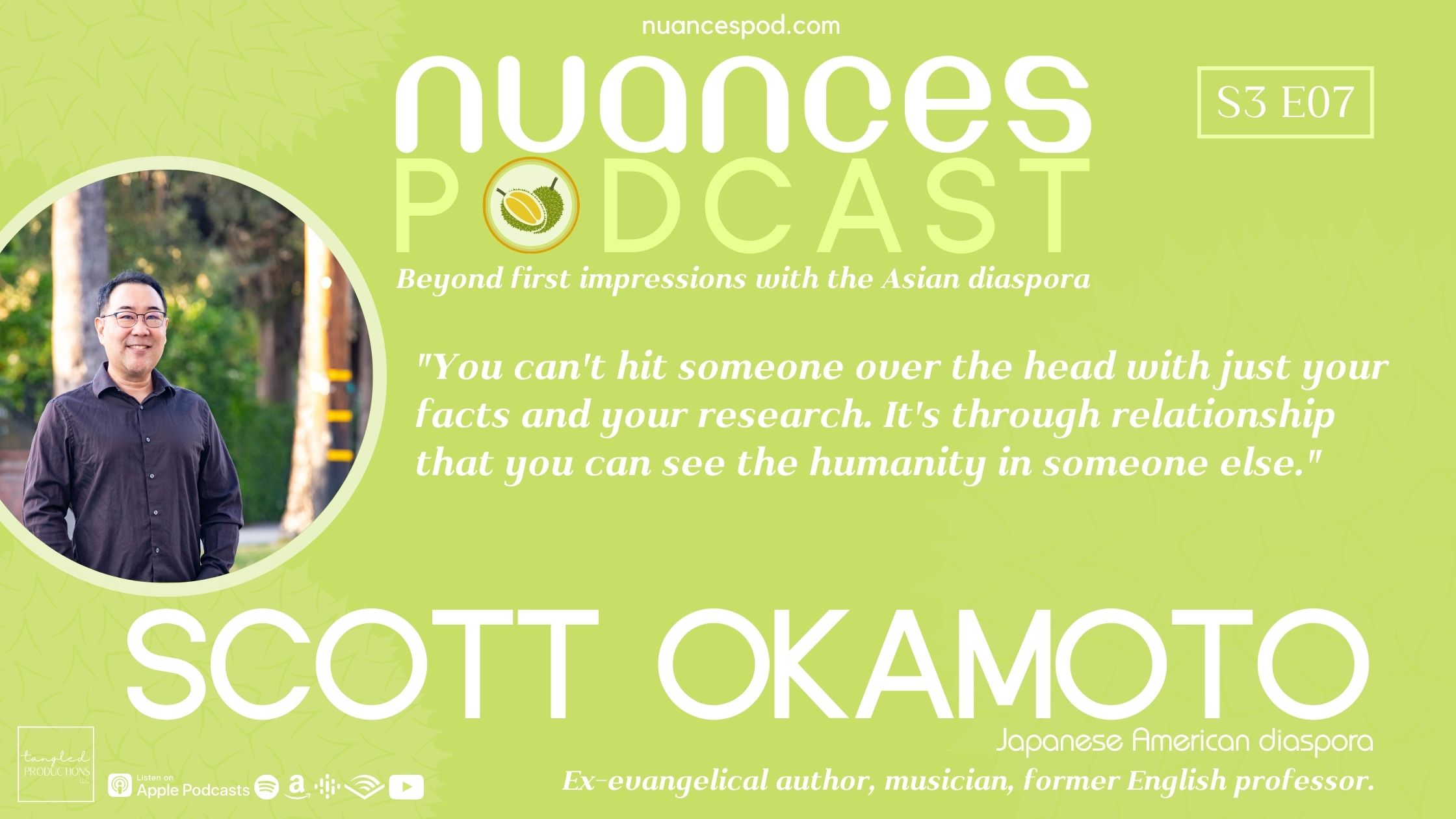
You can’t hit someone over the head with just your facts and your research. But it’s through relationship that you can see the humanity in someone else. And I would put it, see God in someone else, see the divine or the sacred in someone else. And that’s what I tried to do.
some kids went from being super conservative into almost activists for Black Lives Matter and things like that. And so to see someone go on that journey, Was just a real honor for me. I get all teary when I think about some of these kids that cuz to their credit it’s tough.
It was tough for me to deconstruct, it’s tough for them to deconstruct their conservative fundamentalism. It comes at a cost of who they thought they were and who they thought their people were. And so to confront that and to really take a chance and explore these other ways of thinking I give all the credit to them.
All I did was give them a context to where they could decide for themselves whether they wanted to pursue it.
Lazou: Yeah. that was awesome to see that this is still possible because sometimes it feels like it’s not
Scott: It was, well, it was 10, 11, 12 years ago. Like I said I left before the Trump era. I’ve heard that it’s gotten tougher, but, we’re still humans. And yeah, I still believe it’s possible. I really do I still believe the way forward is relationship. The way forward is seeing, it’s really easy for us on the left or the progressive mindset to look at MAGA Republicans and just write them off as lost causes.
30% of this country’s gonna vote for Trump no matter what. And maybe a lot of them are lost causes, but I believe that relationships with these people will help them see us what’s at stake for us. If you vote for Trump, this is what it’s saying.
This is what it’s saying to me, and this is how it’s gonna affect my friends and my community. As Asian, the Asian hate crap that happened after the Covid, you know, That was tied directly to Trump’s rhetoric, and most of the g o p that’s on them. And that’s why it’s so frustrating.
It’s just like old elderly Asian folks are getting killed on the streets and, they don’t see the connection between the rhetoric coming from the top of the country.
Lazou: it’s so frustrating the double standards that they have. So when Covid happened, they would say things like, oh, Kung Flu is just a word, like what’s
Scott: Yeah, yeah,
Lazou: they pass the, don’t say gay bill. It’s
So language does matter,
Scott: yeah,
Lazou: there’s so many double standards.
Scott: the covid was a hoax,
Lazou: yeah.
Scott: it’s also Chinese people’s fault that everyone’s dying of the hoax.
Lazou: So now that you’re not teaching at the school anymore, are you still going out and engaging with those people on purpose and seeking them out
Scott: Yeah. Not personal, online a lot, so I had a beautiful five years after I left the school where I just was like, ah, I’m out. I’m now I had stopped going to church. Now I don’t even teach at the school. Bye. You was living my best life. I had barely thought about this. And it wasn’t until the hashtag ex evangelical hit Twitter, like 2018 or so, that, oh, there’s a whole movement of people now leaving the faith.
There’s all these issues of, decolonizing and deconstructing and man, I have so much to say and I have so much to contribute because of my experiences. this is what was tempting. It was tempting to just ignore it all and just keep living my best life with my community.
And, we’re still fighting against, fundamentalism and fascism things, but you know, now I’m part of like several communities online and Twitter and Facebook and Instagram, and we try to be a resource for people coming out of faith to say that there’s community there’s life, there’s abundance, there’s joy, there’s music.
So yeah, I’m not necessarily going toe to toe fighting with, evangelicals directly, but definitely there, pitching in to be a resource. You know, I started a podcast last year called Chapel Probation, which is specifically about people who went to these schools. And then the book I think is another way I’m throwing my hat in to say, look, I have a story, I have observations, and I hope it will help people find their way out.
Lazou: Yeah. Now many Asian American parents want to send their kids to religiously affiliated schools, even
Scott: Really?
Lazou: not particularly religious. I think that’s a very Asian parent thing. Because they believe that the schools are more strict, and so the kids will learn to be more behaved and more focused on their education.
Scott: no. We gotta do something about that.
Lazou: what would you say to these parents?
Scott: The easy argument for the immigrant parents is that the academics suck at these schools. That should do it right there, right? Because They don’t believe in science, at these schools it’s a ruse of Satan, evolution and evolutionary sciences is a big no-no. So if the school’s accredited, they’ll teach it, but they’ll always give the disclaimer like, we don’t believe this is terrible, but we have to teach this.
So here’s evolution and here’s biology and here’s physics. And so yeah if those immigrant parents want their kids to be doctors, don’t send them to these schools cuz it’s a handicap. Even if they want them to be in the liberal arts, there are film professors who won’t let their students watch R-rated movies.
And all the greatest movies in the world are usually the R-rated ones, so academically you’re really handicapping your kid if you send them to an evangelical school. Now, Catholic schools are different. You’re from a Catholic background. Catholic schools are great.
Because Catholics believe that the school that they’re providing the community should be a resource for the community. And so they hire atheist professors and professors of other religions, cuz they want to provide the most top-notch education in that community. Catholic schools fine.
You may have to go to a chapel or do a mass here and there, but by and large the education’s gonna be fine. Whereas evangelical schools are awful. there’s some great professors who have real degrees, but there’s a lot of just wouldbe Sunday school teachers teaching, history or science or economics or English.
Lazou: Yeah.
Scott: my argument. Don’t, no, if you want your kid to be smart and educated, evangelical schools are the last place you should be looking.
Lazou: Yeah. I was dumbfounded when I read the part in your book where you said that most of these people don’t publish in peer reviewed journals, don’t have any sort of true academic work to showcase.
Scott: No.
Lazou: that is scary. How many people hold these degrees that don’t mean anything.
Scott: a lot of ’em will have a degree from like USC or a big school and have a PhD. A lot of ’em will have ’em from bible colleges. But by and large, the culture is not really there to be peer reviewed. There
Lazou: would be hard to be peer reviewed if you don’t believe in science.
Scott: yeah, there’s no science publishing period whatsoever, but in in biblical studies, there’s some people that publish in the prestigious Catholic journals or the Baptist journals. So there is, there’s a pretty rigorous, like in the areas of religion and a couple of my colleagues in English published and a couple out of, I didn’t yeah.
So there’s a smattering, but it’s definitely not part of the culture. It’s not like when you go to a state school where everyone is clamoring to publish in these peer review journals. Cause that’s what academics do. That is definitely not a value of evangelical schools.
Lazou: Yeah, so one thing I would like to do with the new season of the podcast I think progressives have let the conservatives write the narrative for way too long,
Scott: Ooh.
Lazou: I would like progressives to reclaim patriotism and to rewrite the narrative of what it means to be American. what does being American mean to you, or what would you like it to mean
Scott: Yeah, that’s a great question because I think progressives are very patriotic cuz we’re willing to criticize what we love
Lazou: exactly?
Scott: Yeah. To, and not to tear it down the narrative from the conservatives is, you know, we just wanna destroy America. We’re trying to make it better for everyone including the conservatives.
Whereas the conservatives are really trying to write us out of America, basically. Get rid of the immigrants, get rid of the LGBTQIA+ folks, get rid of trans, get rid of every, everything that they don’t like. they’re just, They want to get us out, whereas, The Progressive really stands for all the foundational principles of America.
This place where, give us your poor right? Give us your oppressed. The Statue of Liberty. Welcoming people in and seeing diversity as a strength that provides so many different perspectives different experiences and backgrounds to make this place richer. The sad thing though is, like you said, the conservatives have co-opted that language to make it scary.
If it’s not gonna be white and conservative, it’s terrifying to them. And we do need to sort of reclaim the narrative and it goes back to the foundation of this country. It’s a group of misfits from all over the world to come together to make something great.
So yeah. A as to how to do that, I don’t know. I, it’s
we don’t have, we don’t have the equivalent of, you know, they’ll say, well you have c n N on one side and Fox, but that’s a false equivalency cuz c n n is not advocating for theology and fascism in the takeover of a singular part of the population.
So,
Lazou: so many false equivalencies.
Scott: so maybe this podcast will Lead the Way. Nuances podcast is the tip of the spear to make it happen.
Lazou: What was a moment in your life where you felt American and felt good about it? Like you felt like you belong here?
Scott: Oof. There’s a lot of them actually.
Lazou: Give us a few.
Scott: yeah. Cuz I, I, to be clear I am proud to be in this country and proud my family has sacrificed a lot, it I am not pro-war or military, but I’m proud of the fact that my great uncles fought Hitler during World War ii while their families were behind barbed wire and they joined 442nd to, spill their guts for a country that had abandoned them.
It’s a terrible narrative. It’s a really crappy thing to have to do, but they did it. And I honor that sacrifice. I, I’m weirdly proud that my dad signed up for a second term as in the Army to serve his country. I don’t want to do it. I was really glad they got rid of the draft before I came of age.
But I can walk into any room and out American someone, because I’m a fourth generation American. my family has built a life here and contributed to this country. And the way I see that is I have this privilege of education of family that came out of camps and built up from nothing, that’s privilege for me.
And so I feel responsible to use that privilege as an American to help everyone else, people who’ve come since then. And so my pride is expressed in the art I do, the things I write, music I play. now it is hard. You know, I go to certain parts of the country and people, ask if I speak English but I’m always proud to say, yeah I teach English how can I help you?
Lazou: Awesome. To end the interview, we like to have Rapid Fire Questions, and these are just short questions, word or one phrase answers. You don’t have to explain, but you can if you want to.
Scott: Okay.
Lazou: All right.
Scott: Yeah.
Lazou: What’s an Asian food that you should like but don’t
Scott: Oh yeah. That’s a tough one cuz there’s so many Asian foods. Um, Stinky tofu I’ve never been able to, I’ve tried it, there’s 6 26 night market, you can smell it throughout pretty much half of the area. I know people who love it.
Lazou: Yeah.
Scott: I didn’t hate it, but it was just definitely not something that was like, ooh, yeah, I’m craving some stinky tofu.
Maybe someday it’s a, maybe it’s an acquired taste, but Yeah.
Lazou: What’s an Asian food that you’ll never get tired of?
Scott: Oh, sushi actually that I’ll say most Asian food, they you name it a Asian identity and I’ll probably have a craving for that food.
Lazou: Yeah. What’s your favorite musical piece to play?
Scott: Ooh. I played clarinet in orchestra. The overture to Candide was a huge part of my development as a classical musician, but pretty much most hard rock stuff on guitar. So anything by rush or the police or van halen that, that makes me happy.
Lazou: Awesome. what woodworking project are you most proud of?
Scott: I built a deck with my daughter during the pandemic,
Lazou: Ooh,
Scott: um, like a 12 by 12 deck in our backyard. so yeah, and came out very, it’s very level. You could put a ball in the middle of it and it doesn’t roll. It’s very level.
Lazou: That’s very good. finally, what’s the most annoying stereotype you’ve had to deal with?
Scott: It’s cliche, but the math thing, everyone always assumes we are good at math, right?
Lazou: Yeah,
Scott: so I was part of a storytelling show with Jenny Yang’s group disoriented Comedy used to put on these storytelling. And I talked about how throughout my academic career, I walk into any faculty room and everyone would always assumed I was a math teacher.
And nothing against math, God bless the math teachers. It’s, I was just never gonna be one because not my thing. So yeah.
Lazou: All right. Thank you so much for taking the time to do this. Really appreciate you
Scott: Oh, thanks for having me. It was a blast. I really dig what you’re doing. I think these conversations that you’re having are definitely the way forward. So thank you.
Lazou: I think that was my way of coping with just how depressing things have gotten and I’m like, there’s gotta be a way where make this accessible to people in a non-threatening way,
Scott: Yeah,
Lazou: and I’m hoping it is accomplishing that.
Scott: there’s always gonna be someone’s threatened or offended by whatever, but I think what you’re doing is really important. let’s
keep it going.
Lazou: Thank you so much.
Leave a Reply