

If you enjoy this show and would like to help me spread the word about it, or support it financially, you can find out more at nuancespod.com/support
GUEST BIO
A Filipino-Canadian artist & songwriter, Dani Saldo creates music that is hyper-vulnerable and lyrically conversational. Using moody melancholia and dreamy coming of age instrumentation, oozing with a knowing nostalgia, Dani’s lyrics are openly honest, genuine & relatable as she effortlessly laments on young love & self-discovery. With a proven track record, Dani is featured on Anna Kendrick’s movie “Alice Darling” with the song “All I Need” which premiered in the 2022 Toronto Film Festival, co-wrote Jillian May’s debut single “Could We Be Happy” which featured on Season 9 of MTV’S Teen Mom OG & on Episode 2 of Season 2 of Netflix’s Love Is Blind, “Nerve” featuring Lauren Light on Teen Mom OG, in addition to being a cowriter on Arcana’s viral hit “Stockholm Syndrome” performed by the dance studio ALiEN in Korea & Ninetone Records Harley Huke’s single “Afraid” & “Joker”. Dani’s debut EP “everything i couldn’t’ say” comes out early next year, speaking more about her experiences with grief, disability, love & mental health. Continuously collaborating with numerous artists & producers she is continuously making music soon to be released. .
DEFINITIONS
- Pancit: Filipino noodle dish.
- Fibromyalgia: chronic disorder that causes pain and tenderness throughout the body, as well as fatigue and trouble sleeping. Scientists do not fully understand what causes it, but people with the disorder have a heightened sensitivity to pain.
- Chronic fatigue syndrome (CFS) is a serious, long-term illness that affects many body systems. Another name for it is myalgic encephalomyelitis/chronic fatigue syndrome (ME/CFS). CFS can often make you unable to do your usual activities. Sometimes you may not even be able to get out of bed.
- Ableism is the discrimination of and social prejudice against people with disabilities based on the belief that typical abilities are superior. At its heart, ableism is rooted in the assumption that disabled people require ‘fixing’ and defines people by their disability.
- Grind culture: people must work hard and be productive to prove their worth, any moment spent resting is a moment when someone somewhere else is doing more than you. It pushes you to work harder, to hustle, but also constantly tells you that you’re never doing enough.
- ODSP: Ontario Disability Support Program
- Sensory friendly venues and events offer an experience that is less overwhelming to the senses, to accommodate for people who have sensory sensitivities. Some examples of people who might appreciate a sensory friendly experience are autistic persons, older adults with hearing loss, veterans with PTSD, people with anxiety. A sensory friendly event might have dimmer lighting, lower music volume, designated silent areas, etc.
MENTIONED
- S2E1: Masaru Tanabe
- S2E3: Tiffany Chou (Depo Market)
- IKEA Philippines – Hapag | Paskong Pinoy Series
- Starter guide to more accessible, sensory friendly events
- Care Work: Dreaming Disability Justice
- Andrew Gurza’s interview with Dani
- Rachel Romu
TAKEAWAYS
- If you are a parent struggling with your child’s queerness because of your religion or other beliefs, just remember that whatever discomfort you’re feeling, your child is likely going through much worse. So instead of invalidating their feelings and experiences, you can commit to learning more and continue to provide a safe space for your child to be themselves at home.
- Feeling secure in your queerness and knowing that you are more than just your queerness can make it easier to talk about it with loved ones.
- Becoming disabled comes with a lot of grief over your old self and a lot of unlearning your own internalized ableism. Perhaps if we all started unlearning our ableism, it might make things a teeny bit easier for people like Dani as they transition into life with disabilities.
- Rest is healing. If you do not allow your body to rest, your body will make you do so eventually. So listen to your body and rest.
- The cost of living is much higher for disabled individuals. Accessible options often cost more. This is yet another example of ableism in society. We can all do a little more to help make our products, services, and events accessible. I’ve included a link in the show notes that might be a helpful starting point on the website at nuancespod.com. Next time you plan a company party, conference, or birthday bash, maybe consider checking that list to see if any of your guests might appreciate some of these accommodations.
- Disabled people have an income cap, but billionaires don’t. This is by design because capitalism is inherently ableist.
- People with disabilities often feel like they are a burden to those close to them. If that is you, please know that you don’t have to do anything to be deserving of love and kindness. You do not have to earn access to your job. Your value to people around you isn’t measured by what you can do for them. You are valued simply because you are you.
- Disabled people can be hot. If that sounds weird to you, it’s because we all have internalized ableism. We’ve never seen disabled people be lead characters who fall in love, so we have a hard time imagining what that looks like. But the good news is, this is fixable with better representation.
CONTACT
Instagram | TikTok | Web | LinkedIn | Twitter
Host: Lazou
Additional Music Links:
- Nuances Podcast – curated Spotify | Apple Music playlists with past guests, hosts & more Asian diaspora artists.
Video with captions
Transcript
Intro
Lazou: Our guest today is Dani Saldo.
Dani is a Filipino Canadian artist who creates music that effortlessly laments on young love and self-discovery. Moody, melancholic, and dreamy coming of age instrumentation complement the oozing nostalgia of her honest, hyper vulnerable, and conversational lyrics.
Dani’s song "All I Need" was featured on Anna Kendrick’s movie, "Alice Darling", and several of her collaborations have been used in Netflix’s Love is Blind and MTV’s Teen Mom OGg. Artist cuts include Jillian May, Harley Huke, as well as Arcana’s viral hit Stockholm syndrome performed by the dance studio ALiEN in Korea. Dani’s debut ep, "everything I couldn’t say", comes out early next year and it explores her experiences with grief, disability, love, and mental health.
Dani, thank you so much for taking the time to be here today.
Dani Saldo: Thank you for having me.
Childhood
Lazou: So let’s start from the beginning. Where’d you grow up and what was that experience like?
Dani Saldo: I grew up in Guelph, Ontario, Canada. I was born in Manila, Philippines. But I left when I was four months, year, four months, years old. I left when I was four months. And it was a very interesting exodus story. But I grew up in the suburbs of Canada. It was very strange growing up cause I didn’t really realize I was Asian until I went to school and I was just only person of color. There was like me and three other Filipino kids, but I was always called their names. So that was very strange to me. yeah.
Lazou: Yeah. You said it was a very interesting exodus story. Did you wanna expand on that?
Dani Saldo: So a lot of Filipinos, when they move from the Philippines to another country, they often leave the kids behind because their passports don’t make it in time. Or it’s just hard to get a kid a visa. So I was born a little earlier than they thought. They had trouble conceiving me. But then when I was born they basically had from April till August to move to Canada. And if they didn’t move to Canada, their visa would be revoked and they’d have to try again, which was hard cuz they were doing it the four years that they were trying to conceive me. So when I was born, my dad took a gamble. Everyone was like, no it’s fine. people do this all the time. Just leave your kid here, we’ll take care of her. It’s fine, then you can come back for it. And my dad was like," the point of me going to Canada is for my kid, why would I not take her?"
I think my dad’s just a badass because he went back to the immigration office one to get my passport. And normally it takes a year for newborns to get their passport because something about birth certificates is hard to get in the Philippines. So he bribed an officer or like a mayor to get my birth certificate so that I could get my passport. And then he returned his application to immigrate to the Canadian Embassy. And they were like, "are you crazy? people are fighting so hard to leave Philippines and you’re just giving it back so you can take your child back?" Then my dad was like, "yes, exactly".
So he turned it back just crossing his fingers, hoping that the lottery would let me come to Canada with them. They waited for a couple months to see if they would have me with them when they left for the Philippines to Canada.
And then like literally they got it a week before the last day that they could fly. And they got approval that I could fly. So then last minute they picked up everything they had, which wasn’t a lot. And they four month old baby, me, to Canada from the Philippines and it’s crazy.
Lazou: Wow.
Dani Saldo: Yeah,
Tension between home vs school culture
Lazou: So growing up in Guelph, did you feel tension between your ethnicity or your family culture at home and the culture around you in school? And how did you balance that out?
Dani Saldo: It was very difficult, I think. Just the classic taking like noodles. Like I’m Filipino, so I took pancit to school and sini gang, which is a beef stew with rice. And a lot of my friends are eating sandwiches and potato and pasta. I feel like every Asian person has gotten the "ew, you’re eating worms. What is that? Your food is so stinky".
I went back home after somebody was like, "Ew, Dani’s eating worms". And I was like, "mom, I want white people food. Why won’t you make me white people food?" And her response was , "I would send you to school with a sandwich if I didn’t love you enough, but I love you enough to make you a home cooked meal every single day. You are eating rice and meat in a warm thermos. You want me to make a sandwich? You’ll only get a sandwich when I’m mad at you".
And to this day, I always take Filipino food anywhere I go, whenever I don’t wanna buy a lunch. While I felt rejected by people around me,my upbringing and my roots to Philippines were always very ingrained in me.
And it was strange to balance because I didn’t really think about it hard enough until I got to high school. But when I got to high school, everything became so much harder. Cuz then I came out as pansexual and I was the classic gay woman experience. I fell in love with my best friend and I was just like, "I really, really like you. I think you’re so sweet and so kind."
And my best friend was like," I love you no matter who you love. We’ll support you."
Did not read that. I was confessing to them and was just like, "I’ll support you in your bisexuality. Pansexuality".
yeah, I think growing up as a first generation immigrant, there just tends to be a disconnect between the kid and like the parents because at some point it’s kind of uncomfortable cuz it’s you moved here so that I could have a better life. But then sometimes I feel like moving to Canada and immigrating in general I think is such a trauma and such a culture shock that it’s. either like binds you together or it separates you. I’m the eldest Asian daughter in the family, so that comes with a backpack of starter pack experiences. And I think both can be true in that you can feel close to your family and close to your roots, but at the same time feel very distanced.
And I feel like for a long time, especially because I was pursuing music my parents were like the classic "Be a doctor". Um, was a lot of pushback, it took a long time to get to where we are. The feeling of otherness, just the perpetual foreigner feeling is one that I haven’t shook. And I think my parents also haven’t shook. But for me, because I grew up in Canada, I’m a lot more liberal than my parents are. While they’re still pretty liberal, but there’s so many things that we intersect about and also fight about.
I watched "Everything Everywhere All At Once", best movie ever, in my opinion. And that is kind of like what my relationship with my parents is like. While we both speak Tagalog, sometimes when we’re talking about love and connectedness, they’re speaking a completely different language than me.
And I’m like, "I need you to meet me here".
And then they’re like," I literally brought you here. Is that not enough?"
And I’m like, " No, sorry. No"
Coming out as pansexual in a Christian family
Lazou: How did they take you coming out as pansexual?
Dani Saldo: bad.
Lazou: Were they supportive?
Dani Saldo: Like, It was difficult at first. Especially cuz I was a very difficult teenager to have. I really struggled with mental health. So that was their first concern. And then when I started adding being into women and stuff like that, it was something that they couldn’t really accept.
And think it’s still a sore spot because my parents are Christian people. They said that because of Jesus and their relationship with God and the church, if I had a girlfriend they would support me, but they’ll never truly accept it, which sucked.
And it felt like they were committing to not knowing me and committing themselves to not accept a part of me, which I still honestly struggle with. used to live with them, and then I had to move out as a result of that conversation. We didn’t talk for three years. And we’re starting to rebuild right now. But it’s still a very difficult thing because I still am pansexual regardless of who I date. And I don’t think it’s something we’re ever gonna truly resolve on, but I know that they’re trying, but still, it, it hurts and both can be true.
Like it can hurt and be a sore point for us, but they’re trying. That’s, that’s all I can really ask. And just the fact that they’re even trying, I think is something for me, and I’m just trying to take what they give me upfront without reading too into it. Because I can, and when I do start looking at things that aren’t there, I think I am the least happy. But then when I just take what they’re giving to me, like trying to translate what they’re saying basically. Like mom says " oh, you’re fat now". I’m like, she really means, wow. I’m so glad you’ve been eating regularly. Or like, "Your skin looks so itchy, did you put lotion on? Because I know you have eczema". There’s always this translation that I feel like I have to do in many regards with being pan and being everything else.
Queerness in Filipino culture
Lazou: Yeah. What are some misconceptions do you think that the Filipino community has when it comes to understanding queerness? Cuz you know, your parents are one of them and, and being Catholic is probably a big part for a lot of people
Dani Saldo: yeah.
Lazou: So what would you say are some of the common misconceptions you’ve come across that you wish they understood better?
Dani Saldo: I wish that people understood that queerness isn’t a punchline. I’ve noticed a lot of Filipino culture, the joke is just that they’re gay and I don’t think it’s that funny. A lot of people I’ve noticed in the Philippines who are queer end up being comedians and not being taken seriously just because of that fact. Watching Filipino shows, some people are just like, " yes, this is this person. And they are…" then there’s a laugh track. I’m just like can we tell better jokes? That’s not a funny punchline. Like maybe if it’s the first time someone’s ever made that joke, but if the basis of your comedy is just that you’re gay, it’s lazy comedy. We can, we can tell better jokes than that guys.
Lazou: All the sexist jokes too. It’s like really? You haven’t that 500 times already?
Dani Saldo: I feel like Filipinos making queerness a punchline is the equivalent of like, " and then I said, get back in the kitchen". You can tell a funnier joke. It’s a strange thing because there’s this inherent uncomfortableness around being queer and being perceived as queer, that people just fall into those stereotypes and archetypes because there isn’t a big space for people who are queer to be taken seriously. But t he people who are feeling safe are like immigrants. They feel safe to explore that side of them. But back home, it’s just not as understood as it could be because of the lack of safety. Like, queer crimes are just so scary back home. It’s so dangerous to be queer that it’s so much safer to just make a joke of it. But I personally know of a few queer people who didn’t make it because of how unsafe it was in the (music) industry to be queer. And they only got to tell their story after their death. And that was so tragic and harrowing and as somebody who was growing up with ’em, I was just like, what the… this is so scary. It’s so scary to discover that you’re queer cuz from what I understand and have felt, you heavily have to fit an archetype or a box. And sometimes when you try really hard to fit that box you, essentially cut off parts of yourself and fitting into that box can hurt and comes with so much pain and cognitive dissonance, especially when you’re not being true to who you are and you’re living for other people. I really struggled with that being queer and getting to make queer friends in the Philippines when I I lived there for a little bit and it was really hard.
Lazou: Yeah, did you see the, I think it was Ikea that did a commercial for Christmas. Did you see that one?
Dani Saldo: No, I didn’t, what was it?
Lazou: This guy comes home and he wants to come out to his dad about being gay, finally musters up the courage to tell his dad. And his dad runs back to his room and he’s thinking, oh no, my dad is taking this really badly. And then his dad comes out in full drag attire and turns out his dad was a drag queen. And it was a happy ending. It was a really cute Ikea commercial.
Dani Saldo: Oh hell. I’m glad that exists because I dunno, sometimes when you’re not accepted by the people around you, you have to find it elsewhere and have your own little found family. So I’m glad that somebody’s watching that and going, hell yeah.
Advice for queer kids
Lazou: So having gone through all of that, do you have any advice for any kids out there who might be afraid to invite their family into their queerness?
Dani Saldo: I think that you should build up. Like for me, had to make sure that my circle of friends knew, I had a good support system and I was taking care of myself. And I felt secure in my queer identity as a bisexual slash pansexual woman. And needed to be secure in it so that when other people would poke holes at it, I had built a strong enough foundation for myself that other people couldn’t poke into it. When I presented this to my family I wasn’t as secure about it. And when people would poke holes, it would hurt. It would feel like when they invalidated my queerness, they were invalidating me specifically.
But as I’ve grown I’ve learned that unless I’m gonna date you, who cares? It’s not your business. Like I’m pretty open about the fact that I am bisexual and I like that it’s more integrated into my personality and that my queerness isn’t all that I am. And my bisexuality is the same as the fact that my favorite ice cream flavor is neopolitan. I couldn’t pick between chocolate, vanilla, and strawberry. So I feel like that is similar to my sexuality and queerness. And because now I feel very secure in it, this is just a fact. I like men, women, non-binary people. I can be attracted to whoever. So when sharing that with my family, though they’re not as receptive to it, it’s a lot easier for me to deal with because I am confident in it by myself and somebody’s like, that’s not real. I’m like, " okay, it’s not my job to educate you". And it’s not, you don’t have to be a teacher for everything and everyone.
Letting people come to terms with it on their own time and making sure that I have this good foundation for myself and my friends and the people around me when I was inviting people to my queerness has been really good for my mental health and being open about it. Because when you’re not sure about things, especially when you’re a teen and you’re still trying to figure things out, it can be really scary cuz your self-identity isn’t as formed yet. So when I first introduced people to the fact that I was bi, I was like, this is all that I am and you are rejecting everything that I am. And it was so painful. But now that I have it more integrated and it’s not as much of a focus point in my personality I think it has made me feel a lot better, a lot more rounded and secure in it. Yeah.
Lazou: Yeah, getting to the point where that’s not the focus and you can be who you are and that just happens to be one of the things that you are,
Dani Saldo: Yeah. I think it’s nice cause I was younger I was just presenting myself. It was like, I’m Dani, I’m bi.
And then it was like, okay, and what, and then what? What else? I think it was lonely having that be my only personality point. It’s just made my life a lot fuller being a more well-rounded person. Not having one thing be my entire identity because I have so much in my identity.
Lazou: Yeah. And I think part of it probably is at that point you were just trying to be accepted for that part that you were so insecure about. And, ironically, it’s a lot easier for people to accept things they don’t know or people they don’t understand when they get to know you and the other facets of you that they can relate to.
And then it’s easier for them.
Dani Saldo: I think that kind of thought process is really helpful when it comes to my other identities, so that like when people meet me and they get to know me and they become friends with me, they are friends with me because I don’t know. I’m a good friend. I’m fun to be around. And then when I bring things about accessibility or being Asian and all of the other stuff, it’s a lot more humanizing cuz you know, when people are talking about things and then they’re like, "yeah, I have a disabled friend."
" yeah, I’ve an Asian friend."
I like the fact that I get to be that person for them just by being their friend and just by existing and taking up space. I think it’s, I think it’s really cool.
Disability journey
Lazou: Yeah, it makes it more relatable to them to know someone personally who’s affected by these things. Would you like to share a little bit about your disability and what that journey has been like for you?
Dani Saldo: Oh, hell yeah. Um, oh my God, I was born with fibromyalgia and chronic fatigue syndrome. But it was pretty manageable for a while. Like it hurt and during puberty, it got rough. I don’t actually know the science, but I just assumed something to do with hormones and depression does not mix with having fibromyalgia specifically. Because I feel like my fibromyalgia is the physical manifestation of my mental health. So in high school, when I was going through all this hormones, sometimes my fibro could render me so that I couldn’t walk because I was just so anxious being at school. That was really difficult. But I was really lucky to have a good base of best friends who helped me through that. And then it became more manageable again.
But then in 2020, in the midst of the pandemic, I got into a car accident. And then after the car accident I fell down on the stairs and then after that and a lot of like therapy, I once more fell on top of an escalator and it hit my head and had a brain bleed.
Lazou: Oh no.
Dani Saldo: So my disability has been a journey because of those multiple things.
And it was very difficult transitioning from someone who has an invisible disability. Like before you couldn’t really tell that I had a disability cause I was walking around all the time. my God. Before my car accident, I was freaking crazy. I was a full-time student, working full-time as a musician. And then on top of that I was doing a two hour commute to my hometown, to see my friends. And I somehow had the time and energy to maintain a 4.0 GPA.
Lazou: Wow, that is impressive.
Dani Saldo: I know. And I would go to school at 7:00 AM until 10:00 PM I guess. Yeah, 10:00 PM And then after that I would go to the studio or my friends or do networking things till 2:00 AM I would go to sleep and then start it all over again before the car accident.
And now it looks a lot different. Something that no one really tells you about struggling with disability is a lot of people when I tell them about this, they’re like, "I hope you get well soon".
And it’s really difficult cuz it’s like," I will not This is just how it will be for a while".
It was hard for me cuz I got into the car accident when I was 21, so I was in my sophomore year, I think of college. So I didn’t get to finish because of how intense my brain injury from it was.
So I was really breaking up with myself and breaking up with the idea of what my twenties was going to be like, and I had to grieve that version of myself because the version of myself that came from the accident is so different of how I thought things were going to go. I didn’t think that somebody would’ve ran a red and hit me with a car. The actions of one person can affect so much of your life that you don’t even consider until you have to deal with it. I was like, yeah, in my twenties I’m gonna travel. I’m gonna work a lot, I’m gonna hang out with my friends and date. But no, in my twenties I will be spending a lot of time in the hospital and spending a lot of time getting better, learning how to walk again, learning how to talk again, learning how to read again, and a lot of things that people just haven’t really done.
So it’s been a very strange journey, but it’s one that I want to be open about because when I was going through this, there was nobody talking about it. I was just in the dark by myself. the fuck, What the fuck is happening? Like, deal with this? If I can’t be the person I want to be, then what? What does that look like? Being the person I want to be? Like, where do I go from here? It’s still a journey in a process.
Resting is magic
Lazou: Have you figured out some of those answers to those questions? Who do you wanna be?
Dani Saldo: At the end of the day, I just want to be me. I just want to be the most me I can be. And if that means that I use mobility aids or I take a little more naps than average 20 year old, so be it. I am trying to fight my internalized ableism and redefine for myself what being in my twenties is like.
And I think at the most, I wanna be kind. I want to be nice and I want for people to meet me to go, wow, she’s really nice, and I want to be known as talented and successful, which that one I’ve been struggling with because, managing being someone who’s a creative and in the creative industry and being disabled is difficult because, dude, I hate grind culture.
Grind culture’s just ableism. There’s no way around the fact that grind culture is just ableism. I don’t exist to work. I exist to live. And if working is the only thing I do, what am I working for? What is the end goal? And so I’ve been really navigating my relationship to working. Cuz I used to be, as you heard, the kind person who used only work, and that was my only personality trait. And that just really was not healthy because then I never saw my friends and I completely disappeared from the face of the earth and I’m still struggling with it cuz I really want to work. The Asian child in me is like, if you’re not working, you’re lazy. But then if I push myself too hard, I will not function and I will see the repercussions on my body. So I’ve been trying to think about the fact that resting is working. Like it is work. Recently I got into another accident where I slipped and fell and hit my head. I had another concussion. So I was in physical therapy and I do vision therapy because my eyes are weird because of all the bonks I’ve had. And we were sitting there like, what do we do? Like we can’t push your brain too hard now because hit your head, you have to rest. We can’t do anything right now. And I was just so bummed out cuz I was like, oh my God, if I rest, that means I’m gonna make no progress for a month until I’m better again. I get to see the progress of my healing with like my vision stuff.
And so, after like my head bonk, I was at negative 200% of progress. It set me back a lot. I went in recently after not working for at least a month and a half, two months-ish. And we are back in the positives. We are abundantly back in the positives, over 200% of healing done with my brain just by resting.
And I was just like, oh shit. Like rest is healing, sleeping is magic. I literally healed my brain by taking naps and not doing work and going out to see my friends and it healed my brain literally. And I think that was really helpful in redefining what my response to grind culture is.
My response is resting is magic, resting is working, and it is just so helpful and so underrated. If you’re working all the time, maybe try working at resting because I’ve been able to enjoy so much just because I’ve been trying to have more work life balance. I’m just so lucky that I’m in a place where I can do that.
Lazou: Basically it’s time to rethink capitalism as it is
Disability & welfare in Canada
Dani Saldo: I just think we should go for socialism because literally, why not? I don’t understand. Why not let people have their basic needs? Is this controversial? Apparently
Lazou: Apparently that’s far left, which is
Dani Saldo: which is crazy to me.
Lazou: Basic human needs really.
Dani Saldo: As someone who’s disabled, welfare is barely enough to meet your basic needs. But then I remember in the pandemic, suddenly after years of being told that universal basic income is impossible because where would we get the money from? In Canada people were getting something called CERB, which was $2,000 every month, just to help meet your basic needs because we were in a pandemic, which was a slap in the face to people on welfare because people on welfare were only getting like a grand. The money had been there the whole time. At any point in any time you could just be magically disabled and then you have to fight a system that is essentially going "your basic needs and your contribution to society are not worth it, another way".
And so most people try their best, but it’s very hard to get your basic needs met if you’re not in a position where you have the support or the financial background or the generational wealth. And so it’s just made me so much more far left. But the government was able to do it, so why not continue doing it? What’s the hold up? Just give people their basic rights.
Lazou: Yep. Well it’s no better down here. I could tell you that.
Dani Saldo: Yeah. I’ve heard it’s, I’ve heard it’s a lot worse.
Lazou: it is. But that doesn’t mean you guys shouldn’t do better either.
Dani Saldo: Yeah, Especially with disability, like your cost of living as a disabled person is so much higher than people without a disability. Cuz you have to take into account physical therapy and medicine and then chiropractic treatments and welfare just doesn’t even cover rent.
Lazou: Not to mention that you have reduced hours that you can work.
Dani Saldo: Oh yeah. If you can work.
And then there’s this disgusting little thing that the Ontario government does where if you make anything over a grand, they’ll take it out of your welfare payment. But the fact that people in poverty, people with disabilities have an income cap and a billionaires don’t makes me so angry. Like, why are we capping the people who need it the most? Why does that even exist? I would understand if it was an income cap for when you become upper middle class person from welfare, but
Lazou: why isn’t it a minimum? Why isn’t it like if you didn’t make at least 40 grand a year, they should give you the rest because you need at least that to barely survive
Dani Saldo: Yeah. To barely survive. That’s not anywhere near enough. And then to make things worse, if you get married or move in with your partner as a disabled person in Ontario -which is in Canada, for Americans listening, it is the place where Drake lives Drake and The Weeknd are from.
But in the place where Drake and The Weeknd are from, if you’re disabled and you move in with your partner or you get married, the government pools you together as a couple for welfare. And then a couple makes less than two single people would on O D S P. Why? Because that’s so dangerous.
And then your partner’s income is counted against your income, which just leaves people with disabilities in a position of vulnerability. I think welfare social assistance programs should help people with disabilities live independently and have access to living independently. It just further cripples the crippled, simply why? Simply why? I hate it.
Disabled & hot!
Dani Saldo: The mentality of disabled people are a burden is just very much a thing. Because for me, sometimes it does feel like I’m a burden. Because I feel like the people close to me have to learn about so much, so quickly because they’re just close to me and it can feel like you’re a burden.
But people in the disability community in Canada are so loud and I’m so glad because that is a space that should be taken up more. There are a couple of people who, in Toronto have inspired me to come out and talk about being disabled and my disability grief journey like namely, Andrew Gurza. He is a very cool disability activist who I got to be on their podcast, and they were just so open and honest about their journey and their experiences in a way that I hadn’t seen before and such a force taking up space unapologetically and said all of the little things that I was too scared to say and just says them on a regular basis and takes up space. It was so cool to see someone like that just talking about their experiences. Also there’s a model that I saw all the time her name’s Rachel Romu, I don’t know how to pronounce anyone’s name, but Rachel, I saw her do runway walks with her cane and campaigns where she was modeling with her cane in a Roots ad.
And she had the cane and I was just like, oh my God is being disabled hot! She’s so badass at taking up space. And it just made me feel like there should be more people doing that. There should be more people taking up space and talking about their experiences because it can be so lonely to be living the disabled life.
Like it’s such a varied experience that just gets multiplied by barriers to access when you have more intersectional identities. And I wanna talk about it to anyone who will listen, I will talk their ear out about what it’s like, what it can be like, and how lonely and strange and funny and sexy and weird it can be, being, like a hot young person who is also disabled, I think why not? Why not I see a lot of people being like, oh, disabled people aren’t hot. to that I say, hello, what’s up?
You
Lazou: just haven’t met one yet, or you didn’t know they were disabled.
Dani Saldo: Yeah. They’re just secretly out there. Disabled people can be hot and I feel like there should be more disabled people being hot out in the world. If there’s any modeling agencies who want diversity, please hit me up.
I can be sexy in a walker and with a cane.
Self-love & disability
Lazou: Absolutely. I was wondering how your disability changed how you think about yourself and practice self-love.
Dani Saldo: It changed it so significantly. I’m a completely different person than before. Before when my disabilities weren’t as high maintenance and they were invisible, it was like, oh yeah, sometimes I just walk slower, but that’s no big deal. To having to be someone, like I’m a musician and I’m photo sensitive. So sometimes at my concerts I’m completely closing my eyes because I cannot see strobing lights because they will make my brain go disgusting. We’re throwing up now, that is too much visual information.
So it really made me feel very vulnerable and very scared. I was really scared about specifically being close to people because It was very hard to feel like being around me was worth it and being my friend was worth it because of all of the things that I go through and I have to face and all of the ups and downs.
So it can be very easy when you have a disability to feel unlovable. I’m so lucky to have friends who are so understanding and supportive and get it. Part of it is because half of my friends are creative. So a lot of the things with being a creative are really similar to being someone with a disability.
You’re taking a path that is unfamiliar for the people around you. You have to explain what it’s like for people who aren’t in that. And there’s just this kind of open understanding and kind of learning. And then the other half is because I am Filipino, half of my friends are healthcare workers. I’m friends with people I’ve grown up with my whole life. And one of them is a physical therapist. One of them is a med tech. And then the other one is studying to be a doctor. And so it’s very easy to be disabled around literal healthcare workers. They also happen to be my best friends. And so it’s honestly just having a community that gets it because I really struggled with the transition from being someone with an invisible illness to someone with a disability, because a lot of my identity was based around the fact that I could work hard and I could work well, and I could work all the time. And so when that changed, I started to lose a lot of friends. I wasn’t as close to certain people as I was before because they just didn’t get it, and they just didn’t take me seriously. And they thought I was mess or too much. And it hurt because it was like the bisexuality thing again. You don’t like me because you don’t like this facet of me. And in that aspect it was true and it was very hard to like deal with and feel secure about letting people in. I think when people meet me at first, they see me and it’s " wow, she’s so strong and she’s so put together and blah, blah, blah, blah". But it takes so much strength to be. vulnerable and so much strength and practice to be myself. And I’m just lucky that the friends that I have are people that I can practice being myself with and that enable that version of myself the most me I can be and being the healthiest me I can be, both mentally, physically, spiritually, everywhere. I don’t know. I feel like I forgot the question, but I hope that there’s an
Lazou: well the question was about, how you changed how you think about yourself and practice self-love, and I think your answer is that you’ve grown to accept that this is a part of your identity, accept that that is not for everyone. But the people that you do have in your life are the ones that are supportive,
Dani Saldo: Mm-hmm.
Lazou: And that’s all you need.
Dani Saldo: Yeah. Integration was the thing that I struggled with the most because before my disabilities I was someone who worked all the time. And because of that, my friends were also people who worked all the time, who were part of grind culture.
And that was all we did together and that was all we talked about. But in becoming more disabled, I strangely am able to enjoy life a little bit more because I’m forced to rest. And if I don’t rest, my body will do it for me. And so the kind of people that I’m friends with now versus when I was not disabled, I feel like my friendships are a lot richer because it’s a lot more balanced and not completely work-based.
And they’re just so kind with me. So I like to practice that back and reflect that back as much as I can.
Lazou: And you deserve the kindness. Why not?
Dani Saldo: Yeah. Another thing with being disabled was , it was very hard for me to accept that I didn’t have to do anything in order to be worthy of love. I felt like I had to do something to be deserving of people’s friendship and people’s love and attention. But the thing that I learned the most was I just have to be, I just have to exist and be myself and people would accept and love me just because I am me, not because I work really hard or because I’m really cool at churning out songs or I’m X, y, Z factor in exchange.
Like it’s a very strange concept that that’s not earned, that you don’t have to do anything to receive that love. You just have to be willing to accept that. And that’s a radical idea for someone who’s worked their whole life to be accepted and people-pleased, that people will love me regardless.
Lazou: Yeah.
Dani Saldo: I remember when I got into my accident, I was so terrified cuz I was like, "if I am not a songwriter, if I’m not someone who can work hard all the time, turn out vocals the day we write it, who am I if I am not this hardworking person?"
Being someone who worked hard, fast, and efficiently was basically my personality at that point. That’s all I talked about. And it was terrifying to be like, oh my God, this core aspect of me is going to change so radically. And labeled myself as that, I didn’t really give myself the permission or the opportunity to grow because it’s natural that parts of you change.
like I, I held down into that idea of who I was for so long and I still honestly do hold onto her cuz I miss her. She was cool, even though she did not have a personality, away from the fact that she worked hard. I still wish I was her and that I could work as hard as she did.
But it was very hard to grow and it was a very I think insecure version of myself and a very disconnected version of myself. And giving myself permission to grow and change has made my life so much richer and more balanced and integrated. Because before, when I was working all the time, I would talk to my friends who weren’t in music and it would be like, I can’t relate at all to anything you’re saying cuz all I do, all I consume and everyone around me is music. And I was really lonely and it’s strange that this disconnect with my body has also made me more connected with my body. If I can accept the fact that I won’t be as able-bodied as I used to be, or even learn or move towards accepting that, I feel like I can grow whatever direction I want.
If that’s the framework that we’re going to be with, just throw any change at me, I’ll be able to find a way through it. I’ve literally survived death multiple times. You think not liking me is going to hurt me. A car hurt me. You can’t do worse than that.
Lazou: Yeah.
You know, it’s funny you mentioned that it’s bringing back memories of when I was thinking about quitting. One of the struggles I had was losing that identity of being the smart engineer. You know, my entire life, I’d been known as the nerdy computer geek and, for a minute there I was like, That is a big part of my personality. Like, what am I if I’m not an engineer? I don’t know if I fully answered the questions because then I became a music producer and mixing engineer. So I think I,
Dani Saldo: Still an
Lazou: still an engineer,
but
Dani Saldo: Different kind,
Lazou: did not completely escape.
I was for a little bit they’re concerned about, would people think I’m less smart now that I’m no longer an engineer? Because being smart was a big part of how I identified with myself. I got over it but..
Dani Saldo: What was it like to get over it?
Lazou: I think I realized that I didn’t really need to worry about other people thought. I mean, I knew that the people who know me know that I’m smart. Nobody would ever question that if they got to know me. The people who would be talking about me, if they even had time to think to do that, you know, they probably don’t matter.
Dani Saldo: Yeah.
Lazou: We hold on to those ideas of who we are. A lot of times, when you really look at it, it’s really selling yourself short if that’s all you define yourself by, you know? If all I define myself by is being a smart engineer, I’m really selling myself short because I’ve always a creative, I’ve always been multi-talented. And even if I lost all those talents too, you know, I’m still a cool person,
you
Dani Saldo: You’re still you. You are. I went through like a friend breakup recently and essentially we broke up because I couldn’t work the same way that they did. And we started to value different things and when I explained it to someone, they were like, "they stop being friends with you cuz you have a healthy work-life balance cuz you don’t live to work?"
and I was like oh that’s something. And I didn’t think to think about it in that way. I was just like, I am lesser than cuz I can’t work all the time like they do. I like take weekends off. And they’re like, " you’re saying that as if taking weekends off is a bad being healthy is a bad thing."
I’m just like, " Oh shit. We just value different things."
If that works for them, then it works for them. People who are in grind culture are just missing out. I feel like a balanced life is like living life in technicolor or like you can see so many different shades rather than done and not done, working and not working.
Especially cuz we live in a capitalist society, many people can be focused on output and what they bring and what can be transactionally of value to people. And I think it’s important to think about just being. Sometimes my disability is, it’s so everywhere, it’s so loud. People are like, " what can I do? Can I fix it? Is there anything I can do?"
No. Unless you can fix my brain or give me new legs. No, you cannot do anything. And that’s okay. I don’t need you to do anything. I just need you to be, I need you to sit in this discomfort with me.
I just need someone to sit in this discomfort with me and make bit less uncomfortable. And just being there and being who you are can be healing. Whenever I’m feeling down or struggling with something disability grief related, I don’t need anyone to actually do something unless I’m like, "Hey guys, I cannot read. Please do my admin."
That’s a completely different thing. But when I’m feeling depressed about my disability or grieving the person that I used to be, or the things that I used to be able to do that I can’t do now, the most important thing someone can do for me is to create space for me to exist and just be myself and hold my hand through it all.
Lazou: Yeah. And I think that’s something that is becoming more and more important post pandemic. You know, lot of people who have long covid who are experiencing disability for the first time. Some might be permanent, some might not, but still.
And I personally have three autoimmune diseases,
Dani Saldo: Ouchie.
Lazou: I’m not technically immunocompromised, but I also am not eager to find out how bad it’ll be if I get it. So I’ve been avoiding the plague actually like a plague, unlike most people,
Dani Saldo: Because it is a plague.
Lazou: Because it is a plague. But apparently most people didn’t get that memo. But you
Dani Saldo: Those people lucky.
Lazou: yeah, I’ve been feeling that isolation as well, where, I don’t feel comfortable going to any music event anymore. Nobody’s wearing a mask, usually there’s food or drinks involved, so
Dani Saldo: not safe
Lazou: Usually a crowded bar. And I’ve had to kind of adjust to that. I used to be going to all of the sync conferences you know, and now I’m like, I don’t know. Do I wanna risk that to network in music?
Dani Saldo: Risk possible death?
Lazou: Or am I cool with not being included anymore?
And I’ve decided I’m cool with not being included anymore.
Dani Saldo: That is such a jump. Because I also have been like struggling with it takes so much energy to go out and physically meet people that I’ve just been like, cost analysis. Am I okay with not being included? Am I okay with not going to every show ever?
I don’t have the energy or the spoons and can be dangerous. What was it like for you to be like, I’m okay to not be included.
Lazou: Again, this is ableism, right? a lot of people are like
"well, I’ll be fine if I get covid".
Not thinking about the people who might have elderly people at home, who might have young children, who might have immune diseases, who might have other complications.
Dani Saldo: Yeah
Lazou: " don’t care about them. I’ll be fine".
And to me, that really spoke to what their priorities are and, very, very obvious ableism. like, okay, those people will not care if tomorrow I am no longer able to breathe on my own. You know what I mean? Like, these are not the people who are gonna be there and hold my hand while I’m on ventilator or anything, you know?
So do I wanna risk my life?
Dani Saldo: They haven’t had to think about that. To them it’s like a theoretical possibility that maybe one day you might hurt someone that way, for you, it’s if this, then that.
Lazou: And you know, I don’t know for sure that it would be bad. It’s possible that I would have a totally mild
Dani Saldo: But don’t
Lazou: I don’t wanna find out.
Dani Saldo: yeah. Like why would you want to find out?
Lazou: Yeah. And, I have had serious medical issues before. I’ve had an open heart surgery when I was 22. I experienced hospital, don’t wanna do it again if I can help it.
I think having had those big life-changing experiences very young has made me, has forced me to grow up really fast and really take the long view on a lot of things that most people don’t get to until they’re much older.
Dani Saldo: Oh yeah. I relate to that.
Lazou: yeah. So I feel like because of that experience, because of everything that I’ve gone through health wise, I just felt likeit d oesn’t make sense to me.
if
if the cost is that I can’t do in-person events and I can only do online Zoom ones, then fine. I’ll just do online Zoom ones because networking with those people is just not worth my life.
Dani Saldo: Yeah.
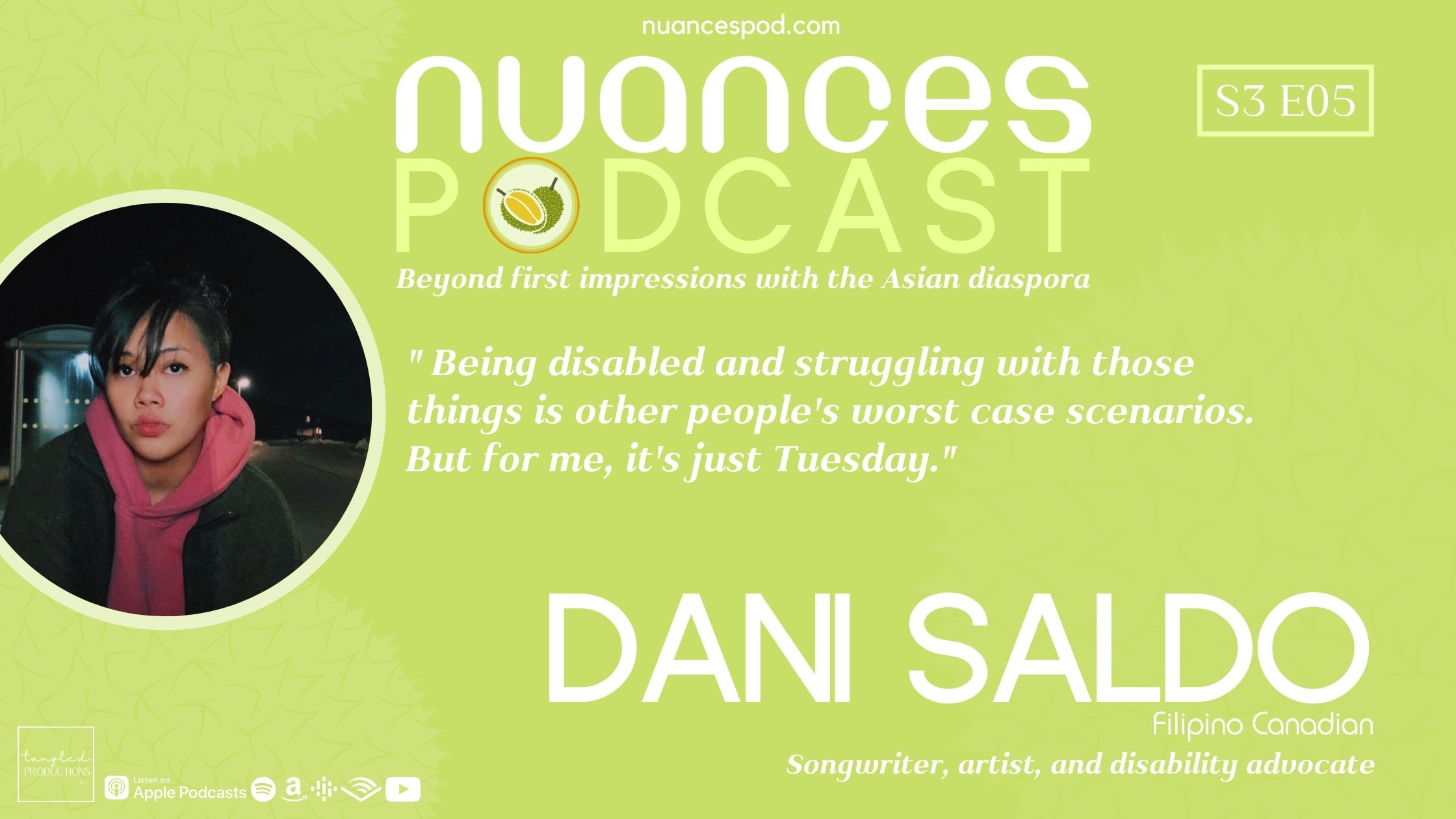
It’s not worth your life. What you said about having to grow up really fast really resonated with me. Cuz when you are exposed to this kind of it’s such a significant change when you have to like consider stuff like that and it can really age you and make you feel really different or other, from other people. For me personally, in the pandemic, going through being disabled and not being able to see people or expose myself to other people, it was strange cuz. A lot of times when you struggle with a change in your health, it’s the worst case scenario for people. Being disabled or having an immunocompromised body and struggling with those things is other people’s worst case scenarios.
But for you, it’s just Tuesday
Lazou: Yeah, exactly.
Yeah
Dani Saldo: It’s so difficult to explain that your worst case scenario is just yep, this is what it’s like. This is just the norm.
Lazou: Yeah.
Dani Saldo: move regardless.
Lazou: I found that the silver lining in having had those experiences very young is that I’ve grown very comfortable with myself and I have come to a point where I feel like no matter what life throws at me, I’ll be fine.
Dani Saldo: Mm-hmm. Yeah
Lazou: I don’t think many people are at that point, and you don’t get to that point until you’ve gone through some shit.
Dani Saldo: Yeah literally I,100%. Life has literally thrown a car at me. So I have hit rock bottom several times and then I’ve hit lower than rock bottom several times and you literally can’t fuck with me.
What could you do to fuck with me when I have gone through so much adversity at a young age like,
Lazou: Yeah.
Dani Saldo: you don’t like me, whatever. Like the escalator that I fell on didn’t like me and what? I survived that too. I can survive You.
Accessible music venues
Lazou: Yeah. definitely. So you seem to be playing shows quite regularly. What are some things that venues and tour organizers could do to make your life easier?
Dani Saldo: Oh my God,
Lazou: I feel like that’s a long list but go for it.
Dani Saldo: It’s such a long list. Okay. When it comes to like venues and shows, I’ve been taking the approach of a frog in boiling water.
" Hi, I’m the artist. This is what I’m doing."
And them getting to know me as a person and as an artist before I’m like, bam, accessibility. But by boiling them in and exposing them to just me as an artist and me being like someone who responds, good on time and will be there when they say they’ll be there. I just put that forward. Like I’m a good professional first and foremost. And then when you’re comfortable, bam, "I have a walker. Please don’t give me stares. Or I will cry. I will cry and cry". And then like when I’ve established that I have accessibility needs and in this circumstance I feel like I have to like, "Earn" accessibility, which you shouldn’t feel like that, but unfortunately it is that way cuz I’ve had experiences where I have to pull teeth for places to be accessible. But I’ve been very lucky that when people don’t listen to me, I have very good allies who will enforce the listening. And so for me I just wish that, why do we need strobe lights? Please explain. Yes, it looks cool. However, what if somebody just discovers that they’re photosensitive at a concert like that would suck. For me like, things that venues can do to be more accessible is have, first of all, accessible seating and wheelchair accessible entrances and loading places would be really cool. But then also not charging people for accessible seating. I’ve gone to concerts and to pay more to sit down because seated cost more and standing didn’t, and that sucked. But in addition to that, I would love if shows were like, yeah, there will be flashing lights at the show, so if you are photosensitive, don’t come to this. Or just, what if we just throw out flashing lights as a whole? I wish that I could have the power to be like, what if we just got more creative with what we do with lights other than stroby flashy lights? Like we can make it pretty, we can, what if we made things 3D instead of flashy?
There’s so many things that are just so difficult when it comes to being an artist with accessibility needs. A lot of times I am one of the first people to be like, "Hey guys, we gotta do this because I am literally the artist coming". " Hey guys, I’m flying all the way here, so please make this accessible". Yeah, basically it’s a long list and I feel like there should just always be somebody on the team who’s their accessibility consultant for venues, like that would be cool. If it was normalized that hey, people with disabilities will be coming to this event, let’s consider them because that is more ticket sales. Just saying,
Lazou: Yeah. And I mean, websites now are required to be accessible to some level, so
Dani Saldo: hell yeah.
Lazou: venues
why not venues?
Dani Saldo: Why not venues. The answer is because it’ll cost more unfortunately.
Lazou: Always does. It costs more to make your website accessible too, that’s not a good enough excuse, right?
Dani Saldo: I agree.
Lazou: yeah.
Dani Saldo: in Toronto, a lot of clubs and bars have stairs. If I’m having a bad leg day and I roll up in my walker and I can’t get into the venue, what are you going to do? Cancel the show?
Lazou: Yeah,
Dani Saldo: I think if you have stairs in your venue and you’re not willing to get rid of the stairs, Hire muscular people to carry people upstairs if there’s no elevator. That should be what it is instead.
Or
like just something.
Lazou: that’s
a solution.
Dani Saldo: It is definitely a solution. Is it the best one? Maybe not.
Accessibility isn’t just stairs and ramps and elevators. It’s also is this place sensory friendly? Is this place photosensitive friendly? It would be so cool if venues were completely accessible, like imagine. What the shows would be like if everyone could access them. As someone who studied marketing, that is access to a bigger market, that is a niche that is unfilled and that is money in pockets. Need I say more.
Lazou: Yeah, Yeah, I lived in Toronto. I went to school there, so I’ve lot of those venues and yeah, they’re not accessible. Usually not even parking too, like good luck finding parking.
Dani Saldo: If you’re looking for parking in Toronto, may as well just cry.
Lazou: I, I took the street card in my gigs. I carried my keyboard or whatever it was.
Dani Saldo: The subways are a lot more accessible than venues, which thank Jesus. But it’s really cool that Toronto is not a car dominated neighborhood and that you can get around without a car. And I wish that venues had that kind of mentality when it came to accessibility. Like just making things as accessible as possible increases the amount of people who are able to access the thing that you have.
Lazou: yeah.
Dani Saldo: Just, be better. Simply be better.
Upcoming EP
Lazou: We’ve talked a little bit about your experience in music. I wanna talk about your music for a second. You have an EP coming up
Dani Saldo: do,
Lazou: And you address some pretty serious themes in your music,
Dani Saldo: I I do.
Lazou: Grief, disability, mental health. Why did you choose those themes?
Dani Saldo: Cuz no one’s talking about it. There’s just so much that hasn’t been talked about, I feel and there isn’t a lot of people who are talking about it. So I thought it was important because those themes take up so much of my life, I feel like it would be dishonest if I wasn’t about those things. This is actually the first place that I’m announcing that I have an EP coming out.
Lazou: Exclusive on the Nuances Podcast.
Dani Saldo: Everything I couldn’t say is a collection of songs that talk about my experiences falling in love and the things that I didn’t get a chance to say because I was afraid and I was scared of how it would affect the relationship and affect the things that were happening in that time and affect my personality.
Like who would I be if I were someone who could say these things? And the answer is "a badass" because I am now saying everything I couldn’t say.
I wrote it when I was going through a pretty complicated breakup. It wasn’t a bad breakup per se, but, we both knew that it wasn’t going to work and that if we continued to be together, we would be prolonging, grief and the inevitable.
And so when you break up with someone who’s best friend and you break up because you know it’s the best thing, it’s such a different experience than, "I hate you. You are the worst person ever". I can’t relate to people who are like, "I hate my ex. My ex is the worst person ever". Cuz I’m like, the people I’ve been in love with have been such lovely and wonderful people who have been the source of inspiration for me. But we weren’t compatible. So our relationship had to end despite the amount of love that was there.
Hopefully I will be releasing it in the fall. I talk about friendship and love. A little bit about grind culture and some of the songs sound like I’m talking about breakups and love, but are actually about me breaking up with myself and what that’s been like. So , if you’re a type of person that likes reading the lyrics it may punch you in the gut. I have bunch of songs that are gonna be coming out this year and I’ll have at least one single coming out with this program , music for Social Change with Art House. And so with them, they’re incubating me as an artist and helping me grow and release a song about a social change cause, which for me is being disabled.
And so I’m gonna be talking about disability grief and just trying to take up more space as both an artist and as a person, and it’s been a very strange journey trying to figure out what a disabled pop star looks like for me. But I hope people listen to them.
Therapy
Lazou: Awesome. who are you writing for and what do you hope they will get out of your music?
Dani Saldo: I think the thing that therapists do really well is make very difficult experiences palatable to their client. I think that’s so cool and I wish that maybe my music could do that for someone who had this really varied and difficult experience, be more accessible and palatable and like something that you can just casually bring up in conversation that would be really lit. I,
While I’m writing for other people, I’m also just writing for like my inner child. I’m singing and saying all of the things that I wanted to hear growing up. I want people not to feel alone in their experiences and know that if you are having literally any feeling ever, someone is also having that feeling like. Experiences are both unique, but also not. Because somebody is going through a version of what you’re going through.
And I basically just want people to go to therapy and listen to my music. At the same time, I wanna be brought up in therapy sessions. There’s so much you can learn about yourself through another person and I think therapy is exactly that, but it’s a safe place to experiment and grow and explore through another person’s lens. It’s just so sick. You can learn so much about both yourself and other people, and I think having someone to sit and sift through yourself with is just so invaluable.
Lazou: Yeah, and I think the self-reflection also leads to what we were talking about where we’re much more comfortable with who we are no matter throws at us.
Makes you a lot more resilient, I think.
Dani Saldo: Agree. Because it’s a foundation.
Lazou: Yeah. cuz it forces you to reflect on yourself and on, your thinking processes and what maybe isn’t serving you.
Dani Saldo: Yeah. Oh my gosh. I grew up with like trauma. So what worked for me as a little kid, as an adult does not work anymore. We are not in that situation anymore. And some things that you learn as a kid don’t work in the adult world, they hurt you. And unlearning those things is so important.
And had I not gone to therapy, I wouldn’t know the ways that I’m actually hurting myself and hurting other people. I just think knowing about that it’s so important. And some people unfortunately never learn that.
Rapid fire questions
Lazou: Yeah. All right, well we like to end this interview with our rapid fire questions. So these are one word or one phrase answers. You don’t have to explain, but you can if you want to. ready?
Dani Saldo: Let’s go.
Lazou: What’s an Asian food you should like, but don’t?
Dani Saldo: Halo halo. I just don’t like beans.
Lazou: What’s an Asian food that you’ll never get tired of?
Dani Saldo: Sinigang. Classic Filipino home comfort food.
Lazou: What was the first language you learned?
Dani Saldo: I learned Tagalog and English at the same time. I like had to go to a speech therapist cuz my parents thought something was wrong and they came back with no, your kid’s just bilingual. They’re like " Does she have a speech deficiency?" No, she’s just bilingual.
Lazou: That’s funny. What is your favorite song off of your upcoming EP right now?
Dani Saldo: Ooh, that’s so hard.
Lazou: Okay. I, I’ll phrase it differently. What is a song that will likely be underrated?
Dani Saldo: Oh, okay. Sweet tea because at first it’s just this calm, sweet ballad, but for some reason in this calm, sweet ballad, we decided to put a post rock outro. It’s so much fun to play live.
Lazou: that’s awesome. And finally who is inspiring you right now?
Dani Saldo: Damn everyone, all of the people that I am friends with inspire me so much. Okay, two people who? one, my biggest artist inspiration right now is Rina Sawayama. She is my mom. She’s not literally my mom, but like emotionally she is my mother. Second one of my best friends. Arcana is an amazing artist. She just moved to Toronto. She’s making moves and I saw her perform live recently and I was like, " you are so cool. People literally have no idea what is coming to them. You are so cool. Probably the coolest person I’ve ever known and I’m so excited for you to blow up". I love her.
Lazou: That’s awesome. Well, thank you so much for taking the time to chat with me today. It was such a pleasure talking to you.
Dani Saldo: Thank you for having me. This was so much fun.
Leave a Reply